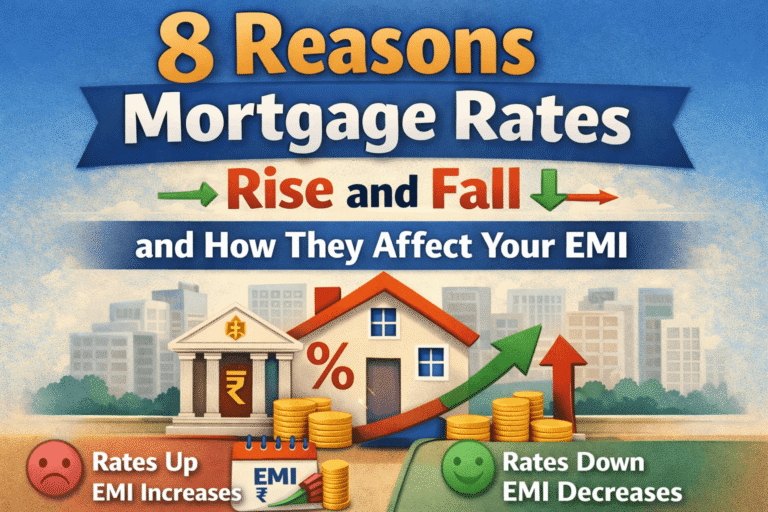
Mortgage rates rise and fall based on a complex interaction of economic indicators, central bank policies, and market sentiment. The primary drivers include inflation levels, Federal Reserve interest rate decisions, and the yield on the 10-year Treasury bond. Additionally, broader economic growth, housing market demand, global geopolitical stability, and individual borrower risk profiles play significant roles. When inflation is high or the economy is booming, rates typically climb; conversely, during economic slowdowns or periods of low inflation, rates tend to decrease to encourage borrowing.
Latest Update
- The Federal Reserve is projected to implement three additional interest rate cuts totaling 75 basis points throughout the remainder of the year to support economic stability.
- Economists at the Davos 2026 summit have noted a growing divergence between the demand for the U.S. Dollar and the demand for U.S. Treasuries, which could lead to increased volatility in mortgage pricing.
- Current market data shows that 30-year fixed mortgage rates have stabilized near 6.0%, reflecting a calmer bond market compared to the significant fluctuations seen in previous years.
- New trade policies and potential import tariffs are being closely monitored by lenders as these factors could exert upward pressure on consumer prices and influence long-term lending rates.
How does the Federal Reserve influence mortgage rates?
The Federal Reserve does not directly set the interest rates you see on mortgage advertisements, but its actions serve as the most powerful catalyst for change. By adjusting the federal funds rate, the Fed influences the cost for banks to borrow money from each other overnight. This ripple effect eventually reaches the consumer market, affecting everything from credit cards to home loans.
While the Fed’s primary focus is on short-term rates, mortgage lenders look at the Fed’s outlook on the economy to price long-term loans. If the Fed signals that it will raise rates to combat inflation, mortgage rates usually climb in anticipation. Conversely, when the Fed cuts rates to stimulate a sluggish economy, mortgage rates often follow a downward trajectory.
In 2026, the Fed’s shift toward a more accommodative stance has been a primary driver in lowering borrowing costs for homeowners. This relationship is often measured by the “spread” between the Fed’s benchmark and the actual rates offered by commercial banks like HDFC or ICICI for home buyers.
Thinking of Closing a Credit Card? Here’s How It Can Impact Your Credit Score
What role does inflation play in rising mortgage rates?
Inflation is the single most significant enemy of low mortgage rates because it erodes the purchasing power of the interest that lenders earn over time. When the cost of goods and services rises rapidly, lenders demand higher interest rates to compensate for the decreasing value of the money they will be paid back in the future.
To put it simply, if a lender expects inflation to stay at 4% for the next decade, they cannot afford to lend money at 3%. They must price the loan high enough to ensure a real profit after accounting for the loss in currency value. This is why mortgage rates are often seen as a reflection of “inflation expectations” rather than just current inflation.
When inflation reports show a cooling trend, mortgage rates typically experience a sigh of relief and begin to drop. However, any sudden spike in the Consumer Price Index (CPI) can cause an immediate jump in the rates quoted by lenders to protect their long-term portfolios.
Why do mortgage rates follow the 10-year Treasury yield?
Mortgage rates are more closely tied to the 10-year Treasury bond yield than any other financial instrument. This is because most 30-year mortgages are either paid off or refinanced within about 10 years, making the 10-year bond the perfect benchmark for comparison. Lenders view Treasury bonds as “risk-free” assets, so they price mortgages at a higher rate to account for the additional risk of lending to individuals.
The difference between these two rates is known as the “mortgage spread.” In a stable economy, this spread is usually around 1.5% to 2%. If the 10-year Treasury yield sits at 4%, you can expect mortgage rates to be around 5.5% to 6%. If investors flock to the safety of government bonds, driving yields down, mortgage rates usually decrease in tandem.
### Comparison: Mortgage Rates vs. Treasury Yields
| Economic Scenario | 10-Year Treasury Yield | Typical Mortgage Rate Trend |
|---|---|---|
| Strong Economic Growth | Rises | Follows upward to attract investors |
| Recession Fears | Falls | Follows downward as demand for safety grows |
| High Market Volatility | Stable or Rising | Spreads widen, causing rates to stay high |
AerCap CEO on Gold, the Dollar, and Why Panic Is the Wrong Move
How does the state of the economy affect your home loan?
The overall health of the economy, measured by Gross Domestic Product (GDP) and employment data, directly dictates how much people are willing to borrow and how much banks are willing to lend. In a booming economy, businesses expand and consumers spend more, which increases the demand for credit. This high demand naturally pushes interest rates higher.
Conversely, during an economic downturn, the demand for mortgages often drops as people become cautious about large financial commitments. To attract the fewer remaining borrowers, lenders may lower their rates. Furthermore, high unemployment rates can lead to lower mortgage rates as the government attempts to stimulate the housing sector to prevent a total economic collapse.
The current 2026 outlook suggests that while GDP growth remains positive, it has slowed enough to allow for the gradual rate reductions we are currently witnessing. Stability in the labor market also helps lenders offer more competitive terms since the risk of default is perceived to be lower.
Does housing market demand influence the rates you see?
Supply and demand within the housing market itself can influence the pricing strategies of lenders. When there are fewer people looking for homes, banks and mortgage companies become more competitive. This competition can lead to “rate wars” where lenders shave off small percentages or offer better terms to capture a larger share of the shrinking market.
On the flip side, when the housing market is red-hot, lenders may be overwhelmed with applications. In such cases, they may raise rates slightly to manage their volume and maximize their profit margins on each loan. This is an internal factor that can cause small variations between different banks, even when the broader economic factors remain the same.
In the current year, we see a balanced market. Inventory has increased, giving buyers more negotiating power, which has kept lenders from pushing rates unnecessarily high. Many borrowers are also utilizing “rate buydowns,” a trend that has gained massive popularity in early 2026.
How do global events and geopolitical risks impact rates?
In our interconnected global economy, an event on the other side of the world can change your monthly mortgage payment. Global instability, such as trade disputes or conflicts, often triggers a “flight to quality.” This means international investors pull their money out of risky markets and put it into the safety of U.S. or high-grade government bonds.
As mentioned earlier, when demand for bonds increases, their yields go down. This paradoxical “bad news is good news” scenario can lead to a sudden drop in mortgage rates during times of global crisis. However, if the global event involves a supply chain disruption (like an oil crisis), it could trigger inflation, which would then push mortgage rates higher.
Recent discussions at international forums suggest that while the U.S. dollar remains dominant, shifts in global trade alliances are creating new pockets of volatility. This makes it essential for prospective homeowners to watch not just local news, but global economic trends as well.
Russia Fuel Oil Exports to Asia Fall Sharply as Sanctions Scare Buyers
How much does your personal financial profile matter?
While the previous factors are “macro” and affect everyone, your personal “micro” factors determine the specific rate a bank offers you. Lenders use your credit score, debt-to-income ratio (DTI), and down payment amount to assess the risk of lending to you. A borrower with a high credit score is seen as low-risk and will be rewarded with the lowest possible market rate.
In India, for instance, many home loans are now linked to the External Benchmark Lending Rate (EBLR). This means your rate will fluctuate based on the RBI’s repo rate. However, the “spread” or “margin” the bank adds on top of that benchmark is entirely dependent on your creditworthiness and the value of the property you are purchasing.
### Data Table: Impact of Loan Terms on Monthly Payments (Example)
| Loan Amount | Interest Rate | Tenure | Approx. Monthly EMI |
|---|---|---|---|
| ₹50,00,000 | 7.10% | 20 Years | ₹39,067 |
| ₹50,00,000 | 8.50% | 20 Years | ₹43,391 |
| ₹50,00,000 | 9.50% | 20 Years | ₹46,607 |
Why do bond market “spreads” cause rates to fluctuate?
The mortgage spread is the difference between the mortgage rate and the 10-year Treasury yield. This gap isn’t fixed; it expands and contracts based on market uncertainty. If lenders are worried that many people will refinance their loans soon (prepayment risk), they will increase the spread to ensure they make enough money before the loan is closed.
Similarly, if the secondary market for Mortgage-Backed Securities (MBS) is weak, lenders cannot easily sell their loans to investors. To compensate for holding these loans on their own books, they raise the interest rates they charge consumers. This is why you might sometimes see mortgage rates go up even when the Federal Reserve is doing nothing.
Understanding the spread is key for those looking to “time” the market. Currently, in 2026, spreads have begun to normalize after a period of extreme widening, which is a positive sign for those looking to secure a loan in the coming months.
Key Takeaways
- Inflation: The primary driver; as it cools, rates typically fall.
- The Fed: Their policy sets the tone for the entire lending environment.
- Treasury Yields: The 10-year bond is the “north star” for mortgage pricing.
- Credit Profile: Your personal financial health decides your final “markup.”
- Market Stability: Global events can cause sudden, unpredictable shifts.
Frequently Asked Questions (FAQ)
What is the most important factor in mortgage rate changes?
Inflation is generally considered the most important factor. It dictates the future value of money, which forces lenders to adjust rates to maintain profitability. When inflation expectations rise, mortgage rates almost always follow, regardless of other market conditions.
Do mortgage rates always go down when the Fed cuts rates?
Not necessarily. While a Fed rate cut often leads to lower mortgage rates, it is not a 1:1 relationship. If the market had already “priced in” the cut, or if inflation fears remain high, mortgage rates might stay flat or even increase despite the Fed’s actions.
Why are my bank’s rates higher than the national average?
Individual banks add a “margin” or “spread” to the base rate to cover their operating costs and risk. If you have a lower credit score, a small down payment, or if the bank has reached its lending limit for the month, they may quote a higher rate.
How does the 10-year Treasury yield affect my mortgage?
The 10-year Treasury yield serves as the benchmark for long-term debt. Since most mortgages are effectively 10-year investments for lenders, they track this yield closely. When the yield on government bonds drops, mortgage rates usually decrease to stay competitive.
Is 2026 a good year to lock in a mortgage rate?
Yes, 2026 is seeing more stability compared to previous years. With inflation moderating and the Fed signaling a path of gradual rate cuts, many experts suggest that locking in a rate now is a sound strategy, especially with the option to refinance later if rates dip further.
Can global wars really increase my mortgage rate?
Yes, global conflicts can increase rates if they cause a spike in energy or commodity prices, leading to higher inflation. Conversely, they can sometimes lower rates if they cause a “flight to safety” where investors buy more government bonds, pushing yields down.
What is a mortgage spread and why does it matter?
The mortgage spread is the difference between the mortgage rate and the 10-year Treasury yield. A wider spread means mortgages are more expensive relative to government bonds, usually due to market volatility or increased risk for lenders.
How often do mortgage rates change?
Mortgage rates can change daily, and sometimes even multiple times within a single day. They respond in real-time to economic news, bond market trades, and updates from the Federal Reserve or other central banks.
Conclusion
Navigating the world of mortgage rates requires an understanding of both broad economic forces and personal financial management. In 2026, the landscape is shifting from a period of high volatility to one of cautious stability. By keeping an eye on the eight factors discussed—inflation, Fed policy, bond yields, economic growth, housing demand, global risks, personal credit, and market spreads—you can make a more informed decision about when to buy or refinance.
While you cannot control the Federal Reserve or global geopolitics, you can control your own financial readiness. Improving your credit score and monitoring the 10-year Treasury yield will put you in the best position to secure a favorable rate. As the market continues to evolve, staying educated is your best tool for long-term financial success in the housing market.