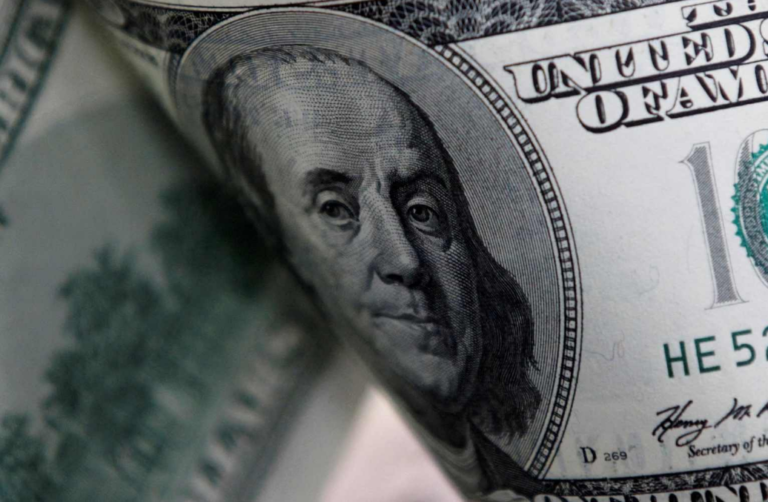
Bank of America Securities warns that a sharp and sustained decline in the US dollar could trigger a recession across the global economy outside the United States. While a weaker dollar may appear supportive for US exports, its deeper impact could slow global growth, intensify deflationary pressure, and destabilize financial markets. Developed economies with fragile momentum are especially vulnerable. The warning highlights rising risks to global stability as currency dynamics break from historical patterns.
The US dollar has long been the quiet heartbeat of the global financial system, steady even when markets tremble. Today, that rhythm feels uncertain. Bank of America Securities has raised a powerful warning that a sharp fall in the dollar could send shockwaves through economies worldwide. This is not a story of simple currency weakness. It is a story of confidence, capital flows, and fragile balance. As markets decouple from old rules, the dollar’s slide may carry consequences far deeper than exchange rates.
Latest Update
- Currency markets are showing unusual behavior as the US dollar weakens despite stable interest rates and strong equity performance. Analysts see this as a signal that traditional safe-haven dynamics are shifting.
- Global central banks are increasingly discussing policy responses to imported deflation caused by dollar movements. Monetary easing is emerging as a common defensive tool.
- Investor sentiment is growing cautious as large institutions warn that disorderly currency moves could disrupt trade and cross-border investment flows.
- Economic models now place a higher probability on a synchronized global slowdown if dollar weakness accelerates beyond controlled levels.
Why does Bank of America believe a weaker dollar could cause a global recession?
Bank of America argues that a sharp dollar decline would reduce global demand, tighten financial conditions abroad, and push many developed economies toward deflation. Since the dollar anchors global trade and capital flows, its sudden weakness would disrupt pricing, debt servicing, and investment confidence.
When the dollar falls sharply, it reshapes the global map of money. Many countries borrow, trade, and save in dollars. A rapid depreciation changes debt values overnight and compresses profit margins for exporters outside the US. This slows hiring, investment, and consumption.
Unlike the United States, many developed economies lack strong domestic growth engines. They rely on stable trade and predictable capital flows. A weaker dollar can hollow out these foundations, turning mild slowdowns into recessionary spirals.
BofA emphasizes that this shock would not arrive loudly. It would spread quietly through balance sheets, through cautious boardrooms, and through households facing slower wage growth.
What makes the current dollar decline different from past cycles?
The current dollar decline is unusual because it is happening without falling US interest rates or weak equity markets. This decoupling suggests deeper structural concerns rather than a normal currency cycle.
Historically, the dollar weakens when US growth falters or when interest rates fall. Today, rates remain around 4.00 to 4.50 percent, and stocks touch new highs. This breaks a decades-old pattern.
BofA sees this as a signal that investors may be reassessing the dollar’s role as a hedge against risk. Policy uncertainty and fiscal expansion are reshaping perceptions of long term stability.
This shift does not mean the dollar is collapsing. It means confidence is becoming selective and fragile.
How large has the US dollar decline been so far?
The US Dollar Index has fallen more than 9 percent over the past 12 months, marking its weakest annual performance since 2017.
| Metric | Value |
|---|---|
| Dollar Index Change | Over 9 percent decline |
| Current Index Level | Near 97 |
| US Policy Rate Range | 4.00 to 4.50 percent |
This decline places the dollar near multi-month lows. While not extreme by historical standards, the pace and context raise concern.
Which economies are most vulnerable to a falling dollar?
Developed economies with weak growth, aging populations, and high debt are most vulnerable to dollar weakness.
| Economy Type | Impact of Dollar Decline |
|---|---|
| High-growth emerging markets | Moderate and manageable |
| Developed low-growth economies | High recession risk |
| Commodity exporters | Mixed impact depending on demand |
Countries with strong domestic momentum can absorb currency shocks. Others may face falling exports, deflation, and rising unemployment.
Could central banks stop the damage from a weaker dollar?
Central banks can soften the impact through monetary easing, but this comes with economic costs.
Lower interest rates can counter deflationary pressure, but they also inflate asset prices and weaken currencies further. This creates a delicate balancing act.
BofA suggests that coordinated policy responses could limit damage. However, coordination is difficult in a fragmented geopolitical environment.
Is the fear of a collapsing dollar exaggerated?
Yes, Bank of America believes fears of a collapsing dollar are overstated due to strong US fundamentals.
The United States continues to lead in productivity growth and innovation. These strengths support long-term demand for dollar assets.
Washington’s ability to finance large deficits remains intact, at least for now. History shows the dollar often regains strength after periods of doubt.
How does policy uncertainty affect dollar confidence
Policy uncertainty weakens confidence by raising questions about fiscal discipline and central bank independence.
Markets are sensitive to political pressure on the Federal Reserve and rising government spending. Expectations of at least 2 rate cuts add to uncertainty.
J.P. Morgan assigns a 35 percent probability to a US and global recession in 2026, reflecting divided sentiment.
Tesla Shares Slip as SpaceX Merger Math Sparks Investor Concerns
Key Takeaways
- A sharp dollar decline could trigger a recession outside the US
- Current weakness breaks historical currency patterns
- Developed economies face a higher deflation risk
- Dollar collapse fears are likely overstated, but risks are real
Frequently Asked Questions
Can a weaker dollar really cause a global recession
Yes, if the decline is sharp and disorderly, it can disrupt trade, debt markets, and investment flows worldwide.
Does a weaker dollar help the US economy?
It can help exporters briefly, but long term instability hurts global demand and US growth.
Why are markets worried now?
The dollar is falling despite strong US rates and stocks, signaling deeper confidence concerns.
Will central banks intervene
Most likely through rate cuts, though this carries inflation and asset bubble risks.
Is the dollar losing its reserve currency status
No, but its dominance is being questioned more frequently.
What is the biggest risk ahead
A sudden loss of confidence leading to disorderly market moves.
Conclusion
The dollar’s whisper has grown louder, carrying both warning and possibility. Bank of America’s message is not one of panic, but of awareness. A sharp dollar decline would not arrive as a single event, but as a slow tightening of global financial air. Growth would soften, confidence would thin, and economies already fragile would bend. Yet the dollar remains rooted in strong foundations. The path ahead depends not on fear, but on balance, policy clarity, and global cooperation. In the rhythm of currencies, stability remains the most precious note.