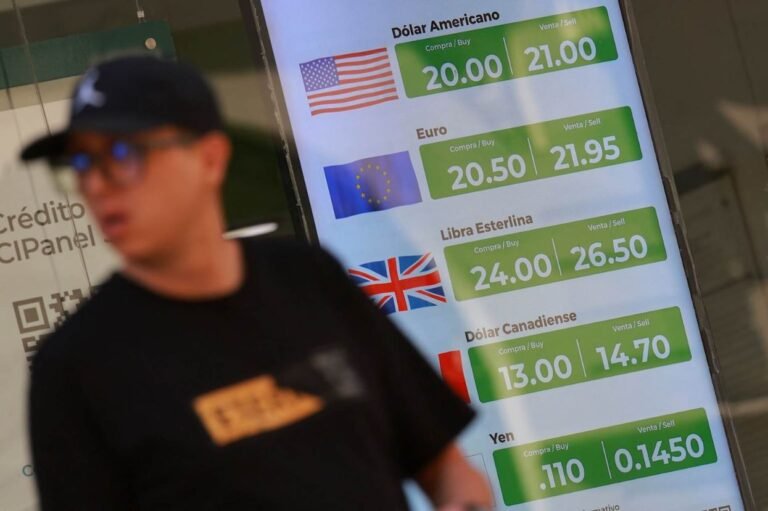
The US dollar weakened broadly as investors reduced exposure to American assets amid renewed tariff fears and political uncertainty. Safe haven currencies such as the Japanese yen and Swiss franc strengthened, while gold surged to record highs. Markets priced in higher political risk on US assets following aggressive tariff announcements targeting European allies. The shift reflects growing concern that trade tensions could disrupt global capital flows, weaken growth, and accelerate diversification away from the dollar.
Introduction
The global currency market reacted sharply as the US dollar lost momentum against major peers, signaling a renewed flight to safety. Investors responded to escalating tariff rhetoric and geopolitical risk by reallocating capital toward traditional havens such as gold, the yen, and the Swiss franc. While tariffs were aimed at Europe, the immediate market impact fell on the dollar itself, highlighting concerns about political risk embedded in US assets. This development has broader implications for equities, bonds, commodities, and real asset investment strategies worldwide.
Latest Update
- Institutional investors increased allocations to gold backed assets and defensive portfolios as volatility rose across currency and equity markets. Portfolio rebalancing favored stability over growth focused exposure.
- Global fund managers signaled a cautious stance on US dominated investments, citing rising uncertainty around trade policy and long term capital flows. Some funds explored higher exposure to Asian and European markets.
- Wealth advisors reported renewed interest in tangible assets including real estate and infrastructure as investors sought protection from currency fluctuations and geopolitical shocks.
Why did the US dollar weaken despite tariffs targeting Europe?
The dollar weakened because markets viewed the tariffs as increasing political and economic risk within the United States rather than strengthening its position. Investors priced in uncertainty around trade relationships, retaliation, and long term growth prospects. This shifted capital away from US assets and into safer alternatives.
While tariffs are often assumed to support domestic currency by reducing imports, markets focus on second order effects. These include retaliation, higher costs for businesses, and strained diplomatic ties. In this case, the aggressive stance toward European allies raised concerns about policy unpredictability.
Foreign investors hold trillions of dollars in US equities and bonds. Any signal that these holdings could be politicized or destabilized increases the risk premium demanded by investors. As a result, capital flows adjusted rapidly, weighing on the dollar.
Read Also: BlackRock Invests Over $1 Billion in Bitcoin and Ethereum ETFs
How do safe haven currencies benefit during trade war fears?
Safe haven currencies strengthen during trade tensions because investors prioritize capital preservation over returns. The yen and Swiss franc are backed by stable economies, strong external balances, and deep liquidity. This makes them attractive during periods of uncertainty.
Japan and Switzerland run persistent current account surpluses and maintain credible monetary frameworks. During global stress, domestic investors also repatriate overseas assets, further boosting their currencies.
The recent surge in these currencies reflects a classic risk off pattern. Investors reduced exposure to growth sensitive assets and rotated toward instruments perceived as resilient in downturns.
What does gold’s record surge signal about investor sentiment?
Gold’s rise to record levels signals deep concern about geopolitical risk, currency stability, and long term purchasing power. Investors view gold as a neutral store of value when trust in policy stability weakens.
Unlike fiat currencies, gold carries no political risk and no default risk. Central banks and institutional investors increasingly use it as a hedge against policy shocks and inflation uncertainty.
The sharp rally suggests that markets are not viewing the tariff episode as temporary noise. Instead, it is being treated as a structural risk with lasting implications for global finance.
How could European retaliation impact global capital flows?
European retaliation could shift global capital flows by encouraging repatriation of funds from US markets. Europe holds a massive share of US bonds and equities, making capital movement more impactful than trade measures alone.
Trade retaliation affects goods, but capital retaliation affects financial stability. Even modest reallocations can influence bond yields, equity valuations, and currency levels.
If European investors reduce US exposure, the dollar could face sustained pressure. This would also raise borrowing costs and tighten financial conditions within the United States.
Read Also: China’s Euro Settlements Surge as Firms Pivot from U.S. Trade
What are the implications for equities, crypto, and real assets?
Risk assets tend to underperform during periods of trade driven uncertainty. Equities face earnings pressure, crypto sees volatility driven selloffs, and real assets gain appeal as defensive investments.
Stock markets in Europe and Asia declined as investors reassessed growth expectations. Cryptocurrencies, often treated as high beta assets, saw sharp value erosion.
Real assets such as real estate, infrastructure, and commodities are increasingly viewed as long term hedges. Investors seeking stability are diversifying into income generating tangible assets.
How does this environment affect long term investment strategy?
Long term investors are shifting toward diversification, capital preservation, and inflation resilience. Overreliance on any single currency or market is increasingly seen as risky.
Portfolio strategies now emphasize geographic balance, asset class diversity, and exposure to real economy assets. This includes selective real estate, precious metals, and defensive equities.
For global investors, currency risk management has become as important as asset selection. Hedging strategies and multi currency portfolios are gaining traction.
Key Market Data Overview
| Asset | Movement | Investor Interpretation |
| US Dollar Index | Declined | Rising political risk premium |
| Gold | Record high | Flight to safety |
| Japanese Yen | Strengthened | Safe haven demand |
| Bitcoin | Fell sharply | Risk off sentiment |
Comparison of Asset Performance in Risk Off Periods
| Asset Class | Typical Behavior | Risk Profile |
| Gold | Rises | Low risk hedge |
| Equities | Decline | High volatility |
| Government Bonds | Stabilize | Moderate safety |
| Real Estate | Defensive | Income focused |
Read Also: IMF and Fitch Warn Fed Interference Could Harm US Credit Rating
FAQs
Why is the dollar weakening right now?
The dollar is weakening due to increased political and trade uncertainty. Investors are demanding a higher risk premium for US assets.
Are tariffs always bad for the dollar?
No, but when tariffs raise uncertainty and retaliation risk, they can weaken investor confidence and hurt the currency.
Why do investors buy gold during trade tensions?
Gold offers protection against policy risk and currency volatility, making it attractive during uncertain periods.
Is the yen stronger because of Japan’s economy?
The yen strengthens mainly due to safe haven flows and asset repatriation during global risk off phases.
How does this affect global real estate investment?
Currency volatility increases interest in stable, income generating real estate markets as defensive allocations.
Should investors reduce US exposure?
Many investors are diversifying rather than exiting completely, balancing US assets with global alternatives.
Does crypto act as a safe haven?
Currently, crypto behaves more like a risk asset and often declines during periods of market stress.
What is the biggest risk going forward?
The biggest risk is escalation that triggers large scale capital movement rather than limited trade retaliation.
Conclusion
The recent weakening of the US dollar highlights how modern markets respond more to political risk than traditional trade logic. As tariff fears resurface, investors are prioritizing safety, liquidity, and diversification. The surge in gold, strength in safe haven currencies, and decline in risk assets reflect a broader reassessment of global stability. For long term investors, this environment reinforces the importance of balanced portfolios that include real assets, geographic diversification, and currency risk management. The path ahead depends on policy clarity, but the message from markets is already clear.