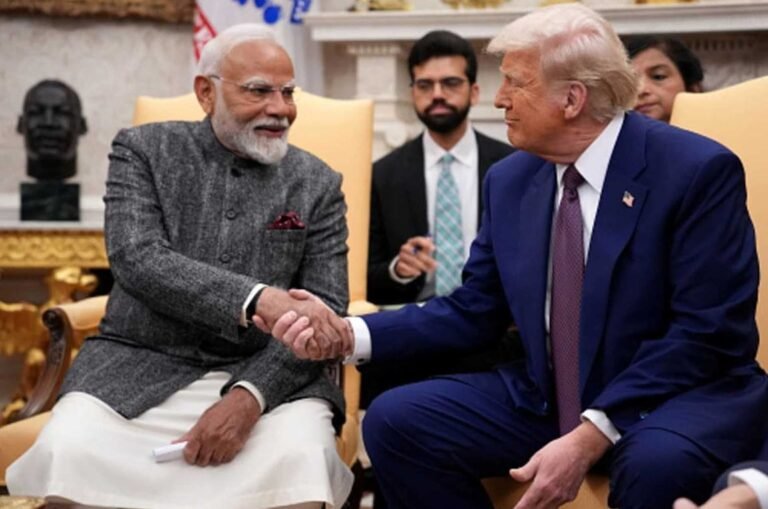
The Indian rupee surged significantly following a landmark trade agreement between President Donald Trump and Prime Minister Narendra Modi, which slashed US tariffs on Indian goods from 25% (and up to 50% in specific cases) to a flat 18%. This strategic deal includes India’s commitment to purchase over $500 billion in American energy and technology while effectively halting Russian oil imports. Consequently, the rupee jumped by approximately 90 paise in NDF markets, signaling a massive return of foreign investor confidence and a bullish outlook for the Indian economy in 2026.
Latest Update
- The Indian rupee reached a decisive turning point as one-month NDF levels shifted toward ₹90.15, marking a sharp recovery from previous lows near ₹91.51.
- Indian stock markets witnessed an explosive rally with the Nifty and Sensex jumping over 2.5% as investors priced in the benefits of reduced export costs.
- Major Indian IT and textile firms are seeing immediate valuation gains as the new 18% tariff structure makes Indian products more competitive than those from China and Vietnam.
- The diplomatic pivot away from Russian crude is expected to reshape global energy flows, with India moving toward massive long-term contracts for American and Venezuelan oil.
How will the Trump-Modi trade deal stabilize the Indian rupee?
The trade deal stabilizes the Indian rupee by removing the “tariff overhang” that fueled currency depreciation and record foreign capital outflows throughout 2025. By lowering the reciprocal tariff to 18% and eliminating non-tariff barriers, the agreement encourages a massive influx of Foreign Portfolio Investment (FPI) back into Indian equities and bonds. This shift in sentiment reverses the downward spiral where importers were aggressively hedging against a weak currency, thereby increasing the daily demand for the dollar.
In 2025, the rupee was Asia’s worst-performing currency, dropping nearly 5% as investors pulled out nearly $17.5 billion. The new agreement acts as a psychological and fundamental floor for the currency. Experts suggest that the Reserve Bank of India (RBI), which spent months defending the ₹92 level, now has more breathing room to manage liquidity. While the transition away from discounted Russian oil may initially increase the import bill, the surge in export earnings and direct investment is expected to provide a much-needed surplus to the balance of payments.
What are the primary terms of the 2026 India-US trade agreement?
The primary terms of the deal involve a significant reduction in US tariffs on Indian exports to 18%, down from a punitive 50% combined rate previously imposed. In exchange, India has pledged to move toward zero-tariff barriers for American products and has committed to a $500 billion purchase plan spanning energy, technology, and agriculture. This mutual de-escalation marks the end of a year-long trade standoff that had stalled supply chains and global manufacturing shifts toward India.
A critical component of the deal is India’s strategic exit from Russian oil markets. India has been importing roughly 1.5 million barrels of Russian crude daily, but the agreement necessitates a total cessation of these purchases in favor of American and potentially Venezuelan energy sources. This move not only aligns India closer to US foreign policy but also removes the 25% “Russian oil penalty” that Trump had previously levied on Indian goods. The following table highlights the shift in trade dynamics:
Read Also: Tesla Shares Slip as SpaceX Merger Math Sparks Investor Concerns
Comparison of Tariff Rates Post-Deal
| Exporting Country | New US Tariff Rate (Approx) | India’s Competitive Status |
|---|---|---|
| India | 18% | Preferred Advantage |
| China | 34% – 60% | Significant Lead |
| Vietnam | 20% | Slight Edge |
| Bangladesh | 20% | Slight Edge |
| Pakistan | 19% | Minimal Edge |
Why did the rupee jump 90 paise in the NDF market?
The 90-paise jump in the non-deliverable forward (NDF) market occurred because investors quickly recalculated India’s economic risk profile following the official trade announcement. NDF markets often act as a precursor to domestic spot market openings, and the shift from ₹91.51 to ₹90.25 reflects a sudden drop in dollar demand. Professional traders who were shorting the rupee covered their positions rapidly, leading to a “short squeeze” that propelled the currency higher.
This surge is also a reaction to the $500 billion commitment made by India, which signals long-term economic integration with the world’s largest economy. When the US lowers tariffs, it effectively increases the profit margins of Indian exporters, particularly in the IT services, pharmaceutical, and textile sectors. These companies will now bring back more dollars to India, naturally strengthening the local currency. The sentiment shift is so profound that it has transformed the rupee from a “perpetual loser” in 2025 to a top contender for the best-performing emerging market currency in 2026.
What does the exit from Russian oil mean for Indian refiners?
For Indian refiners, exiting Russian oil means a complex logistical transition from processing mid-sulphur Russian Urals to lighter US crude or high-sulphur Venezuelan grades. While India saved billions through discounted Russian barrels over the last two years, the removal of US trade sanctions and the reduction of the 50% export tariff more than compensates for the loss of those discounts. Refiners like Reliance Industries and IOCL are now expected to sign long-term supply deals with US energy firms to ensure price stability.
The transition will not be instantaneous, as many refiners have already booked shipments for the coming weeks. However, the move is a massive win for India’s strategic manufacturing sector. By choosing American energy, India secures its “Make in India” products a permanent and cheaper seat in the US market. Analysts believe the increased cost of energy imports will be offset by the multi-billion dollar growth in the textile, gemstone, and engineering export industries that were previously throttled by high tariffs.
Sectoral Impact of the Trade Deal
| Industry Sector | Impact Level | Primary Benefit |
|---|---|---|
| IT Services | High | Removal of retaliatory digital taxes. |
| Textiles | Very High | Cheaper entry into US retail markets. |
| Energy | Moderate | Shift to US/Venezuelan crude sources. |
| Agriculture | Mixed | Zero-duty US imports vs. Indian export growth. |
| Auto Components | High | Improved margins for US-bound parts. |
Will foreign investors return to Indian equities in 2026?
Yes, foreign investors are expected to return to Indian equities in 2026 as the trade deal removes the primary geopolitical and policy uncertainties that caused the record $17.5 billion outflow in 2025. The narrowing of the tariff gap between India and its Southeast Asian peers makes Indian stocks fundamentally more attractive. With the rupee stabilizing, foreign institutional investors (FIIs) no longer face the risk of currency depreciation eroding their portfolio returns, which is often a bigger concern than stock price volatility itself.
Market analysts have already revised their targets for the Nifty 50 and Sensex upward, citing improved earnings visibility for export-heavy sectors. The deal also coincides with new Union Budget 2026 provisions that simplify direct equity investment for overseas individuals. As global supply chains continue their “China Plus One” diversification, the 18% US tariff rate positions India as the most viable large-scale manufacturing alternative, likely triggering a new wave of multi-year capital inflows into the Indian market.
Key Takeaways
- Rupee Recovery: The INR saw a massive 90-paise jump, signaling the end of its 2025 slump.
- Tariff Slash: US tariffs on Indian goods dropped to 18%, giving India a competitive edge over China and Vietnam.
- Energy Pivot: India will stop buying Russian oil in exchange for $500 billion in US trade and energy.
- Market Rally: Sensex and Nifty surged over 2.5% immediately following the announcement.
- FPI Inflow: Renewed investor confidence is expected to bring billions back into Indian assets.
Frequently Asked Questions
How much did the Indian rupee appreciate after the deal?
The Indian rupee appreciated by approximately 90 paise in the non-deliverable forward (NDF) market. It moved from a Monday close of ₹91.51 to an indicated opening near ₹90.15–₹90.25, marking one of the strongest single-day sentiment shifts for the currency in recent years.
Why did President Trump lower tariffs on Indian goods?
President Trump lowered tariffs to 18% as part of a “reciprocal” trade agreement. The move followed India’s commitment to buy $500 billion in American products, move toward zero tariffs on US imports, and stop purchasing Russian oil, which had been a major diplomatic sticking point.
Is India still buying oil from Russia?
Under the new trade agreement, India has committed to cease purchasing Russian oil entirely. While a wind-down period is expected for existing contracts, the long-term plan involves pivoting to energy supplies from the United States and potentially Venezuela to secure tariff concessions.
Which sectors in India benefit most from the trade deal?
The most significant beneficiaries are export-oriented sectors like textiles, IT services, leather, and pharmaceuticals. These industries will see immediate margin improvements due to the reduction of US tariffs from as high as 50% down to a more competitive 18%.
What was the impact on the Indian stock market?
The Indian stock market reacted with a massive rally. The Sensex jumped over 2,000 points and the Nifty surged by more than 2.5% in a single session. This growth was driven by optimism over increased corporate earnings and the return of foreign institutional investors.
Will the rupee continue to strengthen throughout 2026?
Most analysts believe the rupee will remain stable or strengthen further as foreign capital flows into Indian equities. While the shift from discounted Russian oil might increase some costs, the overall boost to exports and foreign investment is expected to support the currency’s value.
Conclusion
The 2026 Trump-Modi trade deal represents a historic realignment of the Indo-US economic partnership. By resolving the long-standing tariff dispute and addressing the Russian oil impasse, both nations have paved the way for a new era of bilateral growth. For India, the immediate rewards are clear: a sharply appreciating rupee, a revitalized stock market, and a significant competitive advantage over regional rivals like China and Vietnam. While the commitment to purchase $500 billion in American goods and exit the Russian oil market presents logistical challenges, the long-term benefit of unrestricted access to the US market is a game-changer for the “Make in India” initiative. As foreign investors return to Dalal Street, the rupee is no longer just a struggling currency but a symbol of India’s growing influence in the global trade hierarchy.