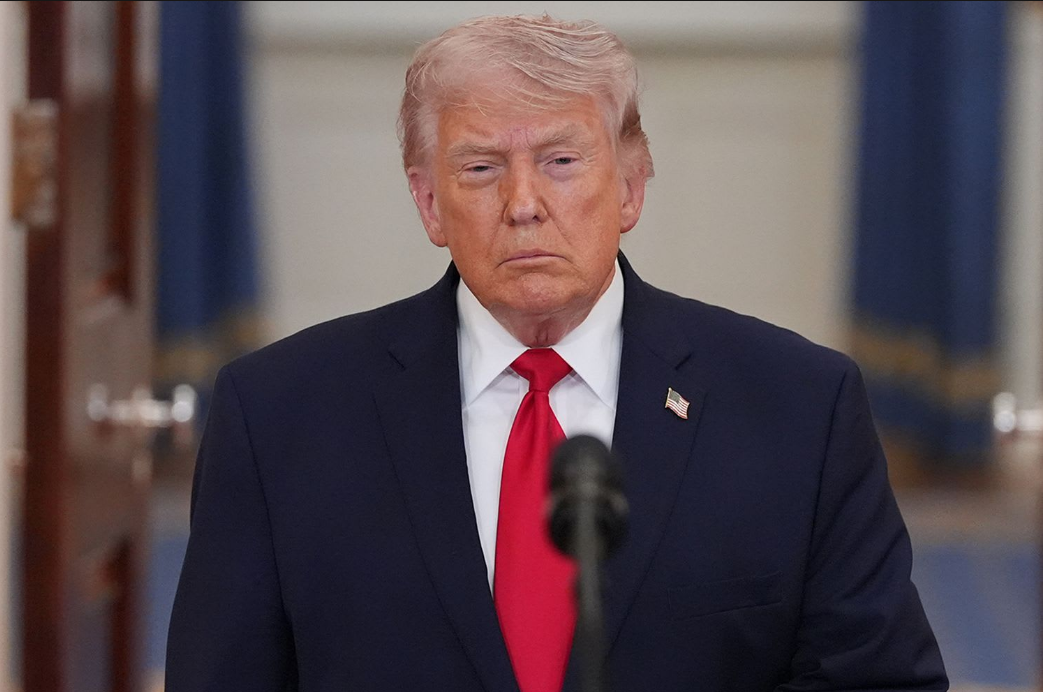
The conflict in the Middle East has entered a perilous new phase as of early April 2026. While President Donald Trump asserts that core strategic objectives are nearing completion, he has simultaneously committed to striking Iran “extremely hard” for at least two to three more weeks. This military escalation is met with a defiant stance from Tehran, where Army Chief Major General Amir Hatami warned that no enemy soldier would survive a ground incursion. With U.S. troop levels in the region surging toward 17,000, the “shadow of war” continues to darken the global landscape.
Latest Update
- Major General Amir Hatami has issued a “zero-survival” warning to U.S. ground forces, stating that not a single life will be spared if a ground incursion into Iranian territory is attempted.
- The Pentagon has deployed the USS George H.W. Bush aircraft carrier to join two other strike groups, while elements of the 82nd Airborne Division and 5,000 Marines are currently flowing into the theater.
- President Trump has officially added the reopening of the Strait of Hormuz as a non-negotiable war objective, vowing to “blast Iran into oblivion” until the shipping lane is cleared.
- A diplomatic rift within NATO has deepened as Spain closed its airspace to U.S. military flights, prompting the White House to threaten a full withdrawal from the alliance.
- Casualties continue to mount, with Lebanon’s health ministry confirming over 1,300 deaths and U.S. Central Command reporting 13 American service members killed since February 28.
Will the U.S. Launch a Ground Invasion of Iran?
As of April 2026, the United States has not officially launched a ground invasion, but the buildup of combat troops suggests that a land-based phase of Operation Epic Fury is being actively prepared. The Pentagon is currently weighing the deployment of 10,000 additional troops, which would bring the total ground force near Iran to over 17,000 personnel.
The Military Standoff:
- U.S. Positioning: The arrival of the USS Tripoli and Marines from California indicates a shift from purely aerial and naval strikes to ground-capable readiness.
- Iran’s Response: Major General Amir Hatami has urged commanders to prepare both offensive and defensive plans, asserting that Iran will monitor every enemy movement to ensure no soldier survives a crossing of their borders.
- The “Stone Age” Strategy: Trump’s rhetoric suggests a preference for continued long-range bombardment to “finish the job” without a protracted ground occupation, yet the troop surge provides the necessary leverage for such an escalation if current strikes fail to reopen the Strait.
What are the Current U.S. War Objectives in Operation Epic Fury?
The objectives of Operation Epic Fury have shifted since the campaign began on February 28, 2026. What started as a mission to diminish missile capabilities has expanded into a broader effort to force a total diplomatic and economic surrender from Tehran.
Primary Objectives as of April 2026:
- Reopening the Strait of Hormuz: This has recently emerged as a mandatory condition for any ceasefire.
- Infrastructure Destruction: Trump has vowed to strike power plants and energy facilities to bring the nation “back to the Stone Ages.”
- Neutralizing Naval Power: The White House claims the Iranian Navy has already been “absolutely destroyed” during the first five weeks of the conflict.
- Strategic Conclusion: The administration aims to “finish the job” within the next 21 days, though no firm exit date has been established.
How Do the Casualty Figures Compare Between the U.S. and Iran?
A fierce information war is being fought regarding the actual human cost of the conflict. Discrepancies between official Pentagon reports and Iranian Revolutionary Guard Corps (IRGC) claims remain vast.
Conflict Casualty Comparison Table (April 2026):
| Category | U.S. Central Command Figures | IRGC / Independent Claims |
| U.S. Personnel Killed | 13 | 650+ (Dismissed by Analysts) |
| U.S. Personnel Wounded | 303 | Unconfirmed High Numbers |
| Lebanon Fatalities | 1,300+ | 1,500+ |
| Iranian Displacements | 180,000 Families | 200,000+ Families |
| Vessels Lost | Minimal | Multiple Claims of Hits |
What is the Status of International Diplomacy and Peace Initiatives?
While the U.S. intensifies its military pressure, a global diplomatic push is gaining urgency to prevent a total regional collapse. However, these efforts are complicated by a fragmented Western alliance.
The China-Pakistan Initiative: A five-point peace plan has been proposed, calling for an immediate ceasefire and the restoration of navigation.
European Resistance: Germany is pressing Beijing to influence Tehran, while Spain and other European allies have refused to contribute forces, leading to the current crisis within NATO.
Iran’s Direct Appeal: President Masoud Pezeshkian has addressed the American public directly, suggesting that while “confrontation” is the current reality, “engagement” remains a theoretical possibility if aggression ceases.
What is the Economic Impact of the Strait of Hormuz Blockade?
The continued closure of the Strait of Hormuz has sent shockwaves through the 2026 global economy. As the world’s most critical energy chokepoint, the blockade has led to unprecedented volatility in oil prices and shipping insurance rates.
Economic Impact Data Table:
| Economic Factor | Status as of April 2026 | Impact Level |
| Global Oil Prices | Near Record Highs | Extreme |
| Shipping Routes | Diversion around the Cape of Good Hope | High Cost / High Delay |
| Insurance Premiums | 400% Increase for Gulf Transit | Severe |
| Supply Chain | Delays in Semiconductor & Energy Parts | Moderate to High |
Key Takeaways: The 2026 U.S.-Iran Conflict in Short
- Military Warning: Iran’s Army Chief vows “not a single life will be spared” in a ground war.
- U.S. Escalation: 17,000 ground troops preparing for potential deployment; 3 carrier groups active.
- The 3-Week Window: Trump expects to “finish the job” by mid-April 2026 using extreme force.
- Strategic Shift: Reopening the Strait of Hormuz is now a primary U.S. war goal.
- NATO in Crisis: U.S. threatens withdrawal as allies like Spain block military flights.
Frequently Asked Questions (FAQ)
1. How many U.S. troops are currently near Iran?
As of April 2026, there are over 7,000 U.S. troops in the immediate theater, with plans to bring the total ground force to over 17,000 following the deployment of the 82nd Airborne and Marine units.
2. What did Iran’s Army Chief say about a ground invasion?
Major General Amir Hatami warned that if the U.S. conducts a ground incursion, “not a single life will be spared,” and that Iranian forces are monitoring every enemy movement.
3. When will Operation Epic Fury end?
President Trump has stated that he intends to “finish the job” within the next two to three weeks, though independent analysts suggest the conflict could last longer if the Strait of Hormuz remains blocked.
4. Why is Spain blocking U.S. military flights?
Spain, along with several other European allies, has distanced itself from the conflict and refused to contribute forces, leading to the closure of their airspace to U.S. military assets.
5. How many Americans have died in the conflict?
U.S. Central Command has confirmed 13 American service members killed and approximately 303 wounded since the war began on February 28, 2026.
6. What is the China-Pakistan peace initiative?
It is a five-point plan introduced in early April 2026 that calls for an immediate ceasefire, the protection of civilians, and the restoration of international navigation.
7. Who is the commander of the Iranian Army?
The commander-in-chief of the Iranian Army is Major General Amir Hatami.
Conclusion
The rhetoric emerging from both Washington and Tehran in the first week of April 2026 points toward a devastating climax of Operation Epic Fury. President Trump’s “Stone Age” warnings and the addition of the Strait of Hormuz to his list of demands have effectively eliminated the possibility of a quick diplomatic exit. Simultaneously, the Iranian Army’s “zero-survival” decree for ground troops suggests that any attempt at a land invasion will result in a casualty count far exceeding current estimates. As 17,000 U.S. troops stand ready and European allies pull away from the coalition, the international community remains on edge, waiting to see if the next three weeks bring a forced peace or an uncontainable regional explosion.