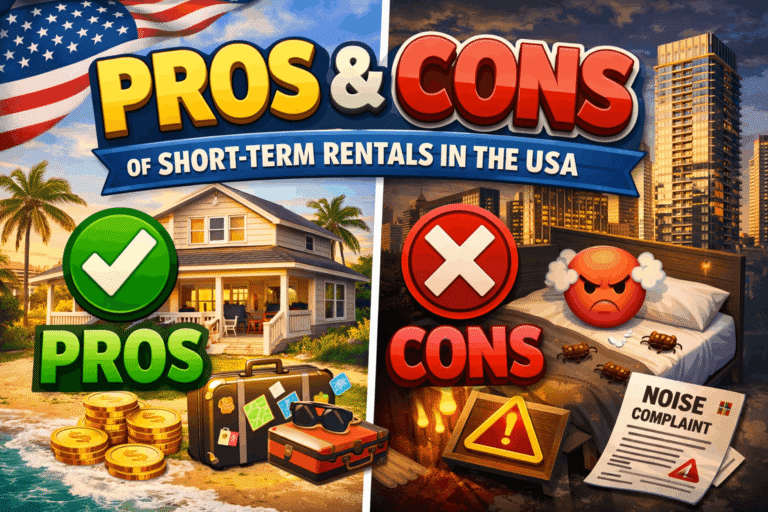
Short-term rentals in the USA offer higher income potential, flexible usage, and strong demand in tourist-driven markets. However, they also come with regulatory uncertainty, higher operating costs, and income volatility. For investors and homeowners, success depends on location, local laws, and professional management. When done right, short-term rentals can outperform long-term leasing, but they require active involvement and risk awareness.
What are short-term rentals, and why are they growing in the USA?
Short-term rentals are furnished residential properties rented for a few nights or weeks, usually through platforms like Airbnb and Vrbo. Their growth in the USA is driven by travel recovery, remote work, and demand for flexible lodging. Guests often prefer homes over hotels for space, privacy, and cost efficiency. Cities with tourism, business travel, and medical hubs see the highest adoption.
The short-term rental market has become a major part of the US housing ecosystem. While it creates income opportunities, it also raises concerns around housing supply, neighborhood impact, and regulation.
Latest Update
- Local governments across the USA are tightening short-term rental rules to protect housing supply and community stability. Many cities now require permits, caps on rental days, or primary residence rules.
- Search interest for short term rental income and Airbnb investment remains strong, especially in suburban and drive to destinations. Investors are shifting focus from big cities to mid-sized markets.
- Data from property management platforms shows rising average nightly rates, but also higher cleaning and compliance costs. Profitability is increasingly tied to professional management and dynamic pricing.
- People Also Ask queries show growing concern about taxes, legal risks, and whether short-term rentals are still profitable. Transparency and compliance are becoming decision drivers.
What are the main advantages of short-term rentals in the USA?
The biggest advantages of short-term rentals include higher income potential, flexible property use, and access to a large traveler market. Owners can adjust pricing based on demand and use the property personally when it is not rented. In the right market, short-term rentals can generate significantly more cash flow than long-term leases.
Key benefits include:
- Higher rental income: Nightly rates often exceed monthly lease equivalents, especially in tourist-heavy locations.
- Dynamic pricing: Owners can raise prices during peak seasons and events.
- Personal use flexibility: You can block dates for family use without tenant conflicts.
- Lower tenant risk: No long eviction process since stays are short.
- Strong demand: Travelers, remote workers, and families prefer home-style stays.
For example, a well-located vacation property can earn in 10 nights what a long-term rental earns in a month. This income upside is the primary reason investors enter the short-term rental market.
What are the financial pros and cons compared to long-term rentals?
Financially, short-term rentals can produce higher gross revenue but also higher expenses and income variability. Long-term rentals offer stability and predictable cash flow, while short-term rentals reward active management and risk tolerance.
| Factor | Short Term Rental | Long Term Rental |
|---|---|---|
| Income potential | High in peak seasons | Moderate and stable |
| Vacancy risk | High during off season | Low with good tenant |
| Operating costs | High cleaning and utilities | Lower ongoing costs |
| Management effort | Highly paid professional | Low to moderate |
| Income predictability | Variable month to month | Consistent monthly |
Net profit depends on occupancy rate, nightly pricing, and cost control. Many investors underestimate expenses like turnover cleaning, restocking, platform fees, and repairs.
What are the biggest disadvantages of short-term rentals?
The main disadvantages include regulatory risk, higher operating costs, and management intensity. Income can fluctuate significantly, and local laws can change quickly. Without careful planning, short-term rentals can underperform expectations.
Common drawbacks include:
- Regulatory uncertainty: Cities can ban or restrict short-term rentals with little notice.
- Higher expenses: Cleaning, utilities, internet, insurance, and platform fees add up.
- Time commitment: Guest communication and issue resolution are ongoing.
- Seasonality: Earnings may drop sharply in off-peak months.
- Neighborhood concerns: Noise complaints and HOA restrictions can create conflict.
For passive investors, these challenges can outweigh the income upside unless professional management is used.
How do regulations impact short-term rentals in the USA?
Regulations are the single biggest risk factor for short-term rentals in the USA. Rules vary by city, county, and state, and can affect permits, taxes, and allowed rental days.
Common regulatory requirements include:
- Business licenses or registration numbers
- Primary residence restrictions
- Caps on annual rental nights
- Local lodging and occupancy taxes
- HOA or condo board approval
Failure to comply can result in fines, delisting from platforms, or forced conversion to long-term rental. Investors must verify local rules before purchasing property.
What tax implications should owners understand?
Short-term rental income in the USA is taxable and often subject to additional lodging taxes. Owners may benefit from deductions but must keep detailed records.
| Tax Aspect | Impact |
|---|---|
| Federal income tax | Rental income added to taxable income |
| State and local taxes | Occupancy and tourism taxes may apply |
| Deductions | Cleaning, repairs, utilities, depreciation |
| Self-employment tax | May apply if services are provided |
Professional tax advice is recommended, especially for multi-property owners.
Are short-term rentals worth it for homeowners and investors?
Short-term rentals are worth it when the location has strong demand, clear regulations, and sufficient pricing power. They are less suitable for highly regulated cities or passive investors seeking stable income.
They work best for:
- Vacation destinations and event-driven cities
- Owners willing to self-manage or hire managers
- Investors comfortable with variable income
They are less ideal for:
- Strictly regulated urban cores
- HOA-controlled communities
- Hands off investors
Key Takeaways
- Short-term rentals offer higher income but higher risk.
- Regulations can make or break profitability.
- Operating costs are significantly higher than long-term rentals.
- Location and compliance determine success.
- Professional management improves consistency.
Frequently Asked Questions
Are short-term rentals legal everywhere in the USA?
No. Legality depends on local laws, zoning rules, and HOA policies. Some cities allow them with permits, while others restrict or ban them.
Do short-term rentals make more money than long-term rentals?
They can, but only in high-demand areas. Higher revenue is offset by higher costs and variable occupancy.
What is the biggest risk of short-term rentals?
Regulatory changes are the biggest risk. A rule change can reduce income or force a switch to long-term leasing.
How much does it cost to manage a short-term rental?
Professional management typically costs 15 to 30 percent of gross revenue, depending on services provided.
Are short-term rentals good for first-time investors?
They can be challenging for beginners due to active management and compliance needs. Education and local research are essential.
Do short-term rentals affect housing affordability?
In some markets, yes. High concentration of short term rentals can reduce long term housing supply and raise rents.
Conclusion
Short-term rentals in the USA present a powerful but complex investment opportunity. They offer strong income potential, flexible use, and access to a growing travel market. At the same time, they demand active management, regulatory awareness, and financial discipline. For investors who choose the right location, understand local laws, and plan for variable income, short term rentals can outperform traditional leasing. For others, the risks may outweigh the rewards. Evaluating your goals, risk tolerance, and market conditions is essential before entering this space.