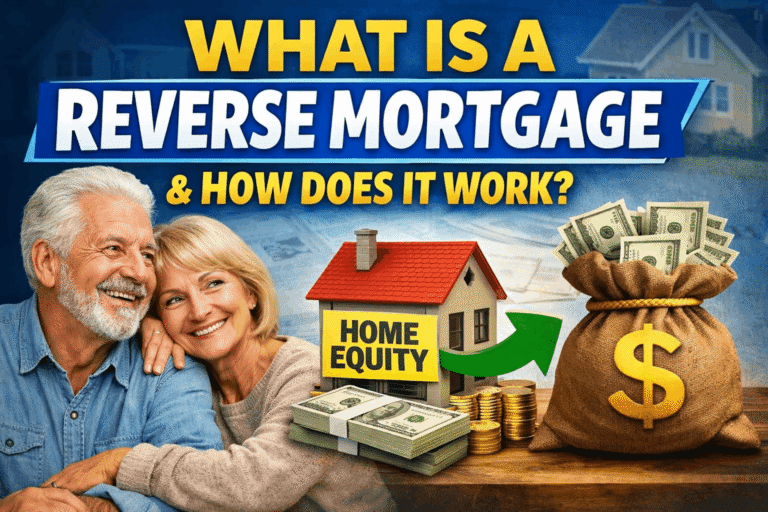
A reverse mortgage is a home loan designed for senior homeowners that allows them to convert a portion of their home equity into tax-free cash while continuing to live in the property. Unlike a traditional loan, monthly repayments are not required during the borrower’s lifetime. The loan is repaid only when the homeowner sells the house, permanently moves out, or passes away. It is mainly used to support retirement income and manage rising living costs.
Introduction: What exactly is a reverse mortgage, and why do seniors use it
A reverse mortgage helps homeowners aged 60 and above unlock the value of their home without selling it. Instead of paying EMIs to the bank, the lender pays the homeowner in the form of monthly income, a lump sum, or a line of credit. The borrower continues to own and live in the house as long as basic conditions are met.
This financial product is often considered by retirees who are asset-rich but cash poor. With longer life expectancy and increasing healthcare costs, reverse mortgages are gaining attention as a retirement planning tool. However, they are not suitable for everyone and require a clear understanding of costs, risks, and long-term impact.
Latest Update
- Financial institutions are expanding reverse mortgage awareness programs as senior citizens seek stable post-retirement income options. Demand is rising due to inflation and limited pension coverage.
- Banks are improving transparency by simplifying loan terms, valuation methods, and payout structures to address trust concerns among elderly borrowers.
- Digital application processes and counseling support are being introduced to help families understand eligibility, inheritance impact, and exit options.
- Search trends show increased interest in reverse mortgage vs selling home and reverse mortgage pros and cons queries.
What is a reverse mortgage in simple terms?
A reverse mortgage is a loan where a homeowner receives money from the lender instead of paying it. The home itself acts as security, and repayment happens only at the end of the loan tenure. Seniors use it to generate a steady income while retaining the right to live in their house.
In a traditional home loan, you borrow money to buy a house and repay it monthly. In a reverse mortgage, you already own the house and borrow against its value. Interest keeps adding to the loan balance over time.
The ownership remains with the borrower, not the bank. However, the loan amount increases as interest accrues. Heirs can repay the loan and keep the property or allow the lender to sell it.
How does a reverse mortgage work step by step
A reverse mortgage works by evaluating the home value, borrower age, and interest rate to decide the loan amount. The lender then disburses funds periodically or as a lump sum. The loan is settled when the borrower exits the home permanently.
- The homeowner applies and undergoes a property valuation.
- The lender calculates the eligible loan amount based on age and house value.
- Funds are disbursed monthly, quarterly, annually, or as a lump sum.
- Interest accumulates on the outstanding amount.
- The loan is repaid when the borrower dies or moves out.
Who is eligible for a reverse mortgage
Reverse mortgages are designed for senior citizens who own a residential property and have no major outstanding loans on it. Eligibility depends on age, property type, and clear ownership.
| Eligibility Factor | Requirement |
|---|---|
| Minimum age | 60 years for the primary borrower |
| Property ownership | Self-owned residential house |
| Loan on property | No existing major mortgage |
| Usage | Self-occupied property |
Joint borrowers usually require the younger spouse to meet the minimum age criteria. Commercial properties are generally not accepted.
How much money can you get from a reverse mortgage
The amount depends on the market value of the house, borrower age, and prevailing interest rates. Older borrowers typically receive a higher percentage of the property value.
| Borrower Age | Approximate Loan Percentage |
|---|---|
| 60 to 65 | 20 to 30 percent |
| 66 to 75 | 30 to 40 percent |
| Above 75 | 40 to 50 percent |
The payout can be structured as monthly income, lump sum, or a combination, depending on lender terms.
Reverse mortgage vs traditional home loan comparison
A reverse mortgage reverses the cash flow direction compared to a regular home loan. Instead of paying the bank, the bank pays the homeowner.
| Feature | Reverse Mortgage | Traditional Home Loan |
|---|---|---|
| Monthly EMI | No | Yes |
| Ownership | Remains with borrower | Transfers after repayment |
| Target audience | Senior citizens | All income earners |
| Repayment timing | End of tenure | Monthly |
REITs vs Buying Rental Property: Which Investment Wins for You?
What are the benefits of a reverse mortgage
Reverse mortgages provide retirement income without selling the house. They reduce financial stress and offer flexibility in fund usage.
- No monthly repayment burden
- Tax-free income stream
- Continued residence in the home
- Useful for medical and living expenses
What are the risks and disadvantages you should know
Reverse mortgages can reduce inheritance value and involve compounding interest. They also come with fees and long-term cost implications.
- Loan balance increases over time
- Heirs may receive reduced property value
- Property maintenance responsibility remains
- Limited lender availability
Is a reverse mortgage better than selling your home
A reverse mortgage suits those who want to stay in their home and need income. Selling may be better if relocation or large capital is required.
Reverse mortgages preserve emotional attachment to the house. Selling provides immediate liquidity but requires downsizing or renting.
Key Takeaways
- A reverse mortgage converts home equity into income
- No EMIs during the borrower’s lifetime
- Best suited for senior citizens with low cash flow
- Long-term cost awareness is critical
Frequently Asked Questions about Reverse Mortgages
Is reverse mortgage income taxable?
No. The amount received is treated as a loan, not income, so it is tax-free.
Can heirs lose the property?
Heirs can repay the loan and keep the property, or allow the lender to sell it.
Do I still own my house?
Yes. Ownership remains with the borrower throughout the loan tenure.
What happens ifthe property value falls?
The lender bears the market risk, not the borrower or heirs.
Can I prepay a reverse mortgage?
Yes. Most lenders allow foreclosure without heavy penalties.
Is a reverse mortgage available for flats?
Yes, provided the flat is self-owned and approved by the lender.
Conclusion: Should you consider a reverse mortgage
A reverse mortgage can be a powerful retirement planning tool for senior homeowners who want financial independence without selling their home. It offers steady cash flow, dignity in retirement, and protection against rising expenses. However, it is not free money and involves long-term costs that affect estate value.
Before choosing a reverse mortgage, seniors and families should evaluate alternatives, understand payout structures, and seek financial counseling. When used thoughtfully, it can provide stability and peace of mind in the later years of life.