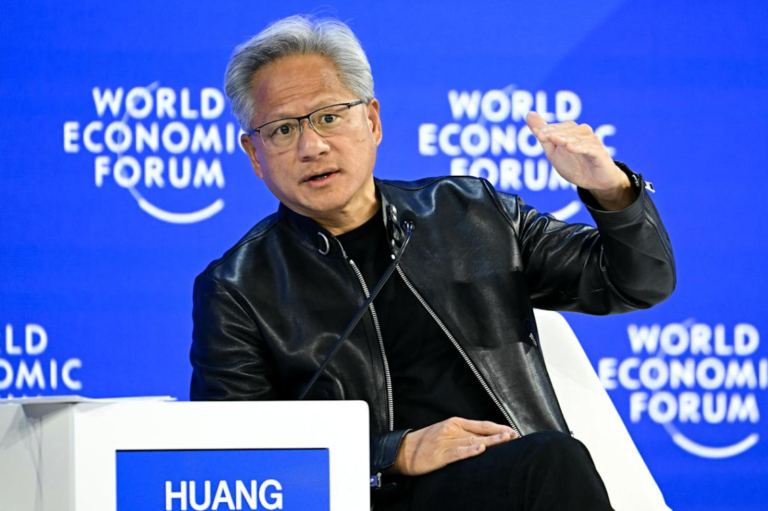
Global stock markets surged as powerful optimism around artificial intelligence combined with a sharp shift in United States trade policy. Strong comments from Nvidia CEO Jensen Huang positioned AI as essential national infrastructure, lifting global technology stocks. At the same time, President Donald Trump stepped back from proposed tariffs on European nations, easing geopolitical risk. Together, these moves sparked broad based gains across Asia, Europe, and the United States.
Introduction: Why global markets are rallying right now
Global equities are experiencing a synchronized rally driven by two decisive forces. The first is renewed confidence in artificial intelligence as a long term economic engine rather than a short lived technology cycle. The second is easing geopolitical tension after President Donald Trump reversed course on threatened tariffs tied to Greenland-related negotiations.
Technology stocks led gains across major indices, while investor risk appetite improved worldwide. From Tokyo to New York, semiconductors, AI infrastructure firms, and growth oriented companies surged. This rally is not speculative enthusiasm alone. It reflects a recalibration of how markets value infrastructure, trade stability, and national competitiveness in an AI driven world.
Latest Update
- The South Korean Kospi index successfully breached the psychological 5,000-point barrier during intraday trading, a historic peak driven by a surge in semiconductor giants like Samsung and SK Hynix. This milestone reflects a massive influx of retail and institutional capital into the Seoul market following positive geopolitical signals.
- SoftBank Group shares witnessed a dramatic rebound in Tokyo, jumping over 13 percent after recent reports confirmed its multi-billion dollar strategic stake in OpenAI. The investment has positioned the Japanese conglomerate as a primary vehicle for investors looking to gain exposure to the next phase of generative AI development.
- Nvidia CEO Jensen Huang made a high-profile appearance at the World Economic Forum in Davos, where he compared AI technology to the invention of electricity. During his session, he unveiled a vision for a five-layer AI infrastructure stack that he believes will require trillions of dollars in global investment over the coming decade.
- Intel shares surged more than 11 percent as the company prepares to release its latest earnings report, with analysts noting the firm is nearly sold out of high-end server CPUs. The company’s turnaround strategy under new leadership has gained significant traction, particularly as demand for AI data center hardware continues to outstrip supply.
Why is artificial intelligence driving global stock market optimism?
Artificial intelligence is now viewed as foundational infrastructure similar to power grids and transportation networks. Investors believe AI will generate sustained demand for chips, data centers, software, and energy. This perception has shifted capital toward companies positioned to build and operate AI systems. As a result, markets are pricing in multi-year growth rather than short-term innovation cycles.
At the World Economic Forum, Nvidia CEO Jensen Huang framed AI as the largest infrastructure buildout in human history. This statement resonated because it aligns with visible spending plans by governments and corporations. AI is no longer experimental. It is operational, strategic, and capital-intensive.
Read Also: BlackRock CEO Calls Blockchain Based Finance Necessary at Davos
Market Performance Comparison: Semiconductor Leaders
| Company | Region | Single-Day Gain | Key Driver |
|---|---|---|---|
| SoftBank Group | Japan | +13.2% | OpenAI investment & Arm ownership |
| Intel | USA | +11.4% | AI server CPU demand & earnings optimism |
| Advantest | Japan | +5.0% | Semiconductor testing equipment demand |
| SK Hynix | South Korea | +3.3% | High Bandwidth Memory (HBM) leadership |
| Philadelphia Semi Index | USA | +3.18% | Broad-based chip sector recovery |
Key drivers behind AI-fueled optimism include:
- Massive capital expenditure on data centers and cloud infrastructure
- Rising demand for advanced semiconductors and memory chips
- The government level focuses on AI sovereignty and national competitiveness
- Enterprise adoption across healthcare, finance, manufacturing, and defense
Investors are responding by assigning higher valuations to companies embedded in this ecosystem. This includes chip designers, equipment makers, and infrastructure owners.
How did SoftBank become a major beneficiary of the AI rally?
SoftBank surged because it is heavily exposed to AI growth through strategic investments. Its stake in Arm and reported ₹3,30,000 crore equivalent exposure to OpenAI position it as a proxy for global AI expansion. When AI sentiment improves, SoftBank shares tend to amplify those gains.
SoftBank jumped more than 13 percent in Tokyo trading, becoming the top performer on the Nikkei 225. This rebound followed months of pressure linked to valuation concerns and higher interest rates. The AI narrative changed investor perception almost instantly.
SoftBank benefits from:
- Ownership of Arm, a critical architecture provider for AI chips
- Direct and indirect exposure to leading AI model developers
- A global investment footprint aligned with future technology platforms
Japanese semiconductor equipment firms also rallied alongside SoftBank, reinforcing the idea that AI spending will support the entire supply chain.
Read Also: Seven Top Indian CEOs to Meet Donald Trump at Davos Reception
What does the Asian market rally signal about global risk appetite?
The strong rally across Asian markets signals rising global risk appetite and confidence in growth assets. Investors are willing to move beyond defensive positioning as trade risks ease and technology earnings outlooks improve. Asia is acting as an early indicator of broader global momentum.
Japan’s Nikkei rose nearly 2 percent, while South Korea’s Kospi briefly crossed the 5,000 level for the first time. Semiconductor-heavy markets outperformed, reflecting confidence in export demand and global tech investment.
Key Asian market reactions:
| Market | Index Movement | Primary Driver |
|---|---|---|
| Japan | Strong gains | AI exposure and semiconductor strength |
| South Korea | Historic milestone | Memory chip demand and global tech rally |
| Taiwan | Positive momentum | Chip manufacturing leadership |
This regional strength supports the idea that the rally is broad-based rather than localized.
Why did United States chip stocks surge overnight?
United States chip stocks surged due to improving demand visibility and strong AI related order books. Intel, AMD, and Nvidia are benefiting from data center expansion and enterprise AI adoption. Analyst upgrades and earnings optimism further fueled the rally.
Intel rose more than 11 percent, reaching levels not seen since early 2022. Analysts highlighted that server CPU capacity is nearly sold out for the year, particularly for AI data center deployments.
The semiconductor rally lifted the broader market:
- AMD climbed nearly 8 percent on AI accelerator optimism
- Philadelphia Semiconductor Index gained over 3 percent
- Memory producers saw renewed investor interest
This momentum suggests that the AI trade is expanding beyond a few headline names into the wider ecosystem.
Read Also: AI Data Centers Drive Record Profits for Asian Power Equipment Makers
How did Trump tariff reversal change the market narrative?
Trump’s decision to step back from planned tariffs reduced immediate geopolitical and trade risk. Markets interpreted the move as a willingness to negotiate rather than escalate. This improved investor confidence and supported a global risk on environment.
The proposed tariffs on European countries had raised concerns about supply chain disruptions and retaliatory measures. By announcing a framework for dialogue related to Greenland, the United States removed a key uncertainty hanging over markets.
Impact of the tariff reversal:
- Lowered volatility expectations across equity markets
- Improved outlook for multinational corporations
- Supported gains in European and United States indices
The S&P 500 and Dow Jones Industrial Average both rose more than 1 percent following the announcement.
How does AI infrastructure compare to traditional infrastructure investment?
AI infrastructure differs from traditional infrastructure in speed, scalability, and capital intensity. While roads and power grids take decades to build, AI systems evolve continuously. However, both require massive upfront investment and long term policy support.
| Aspect | Traditional Infrastructure | AI Infrastructure |
|---|---|---|
| Build Time | Long term | Rapid but ongoing |
| Capital Needs | High | Very high |
| Government Role | Primary | Shared with private sector |
| Economic Impact | Gradual | Accelerating |
This comparison helps explain why investors are comfortable assigning premium valuations to AI related assets.
What does this rally mean for long-term investors?
For long-term investors, the rally highlights the importance of structural themes over short term noise. AI, trade stability, and infrastructure investment are shaping asset allocation decisions. Volatility may continue, but the underlying growth drivers remain intact.
Investors should focus on quality, balance sheet strength, and strategic positioning within the AI ecosystem. Chasing momentum without fundamentals carries risk, but ignoring this shift could mean missing a generational opportunity.
Strategic considerations include:
- Diversified exposure across AI hardware and software
- Geographic balance to manage policy risk
- Long-term horizon to absorb market cycles
In Short: Key Takeaways
- Global stocks rallied on AI optimism and reduced trade tensions
- Technology and semiconductor stocks led gains worldwide
- SoftBank and Asian markets amplified the AI narrative
- Trump tariff reversal eased geopolitical risk
- AI is now viewed as essential economic infrastructure
Frequently Asked Questions
What triggered the global stock market rally?
Strong optimism around artificial intelligence and the easing of United States tariff threats triggered the rally.
Why is AI considered infrastructure?
AI supports economic productivity, national security, and industrial competitiveness, similar to power and transport systems.
Which sectors benefited the most?
Semiconductors, technology, and AI infrastructure-related companies saw the strongest gains.
Why did SoftBank shares rise sharply?
SoftBank has significant exposure to AI through Arm and OpenAI related investments.
How did Asian markets react?
Asian indices surged, with Japan and South Korea leading on technology strength.
What was the impact of the tariff reversal?
It reduced trade uncertainty and improved investor risk appetite globally.
Is this rally sustainable?
Sustainability depends on earnings growth and continued AI investment, but structural drivers remain strong.
Should retail investors enter now?
Retail investors should focus on long term fundamentals and avoid short term speculation.
How does this affect real assets and property?
AI infrastructure demand may boost data center real estate and technology focused commercial property.
What should investors watch next?
Corporate earnings, AI capital spending plans, and geopolitical developments will guide markets.
Conclusion
The global stock market rally reflects more than a reaction to headlines. It marks a shift in how investors value technology, infrastructure, and policy stability. Artificial intelligence is no longer a niche growth story. It is becoming the backbone of future economies. At the same time, pragmatic policy moves are reducing friction in global trade.
For investors, this moment underscores the importance of aligning portfolios with long term structural trends. While volatility will persist, the combination of AI-driven growth and easing geopolitical risk provides a powerful foundation for global equities. Staying informed and disciplined will be key as markets navigate this new investment cycle.