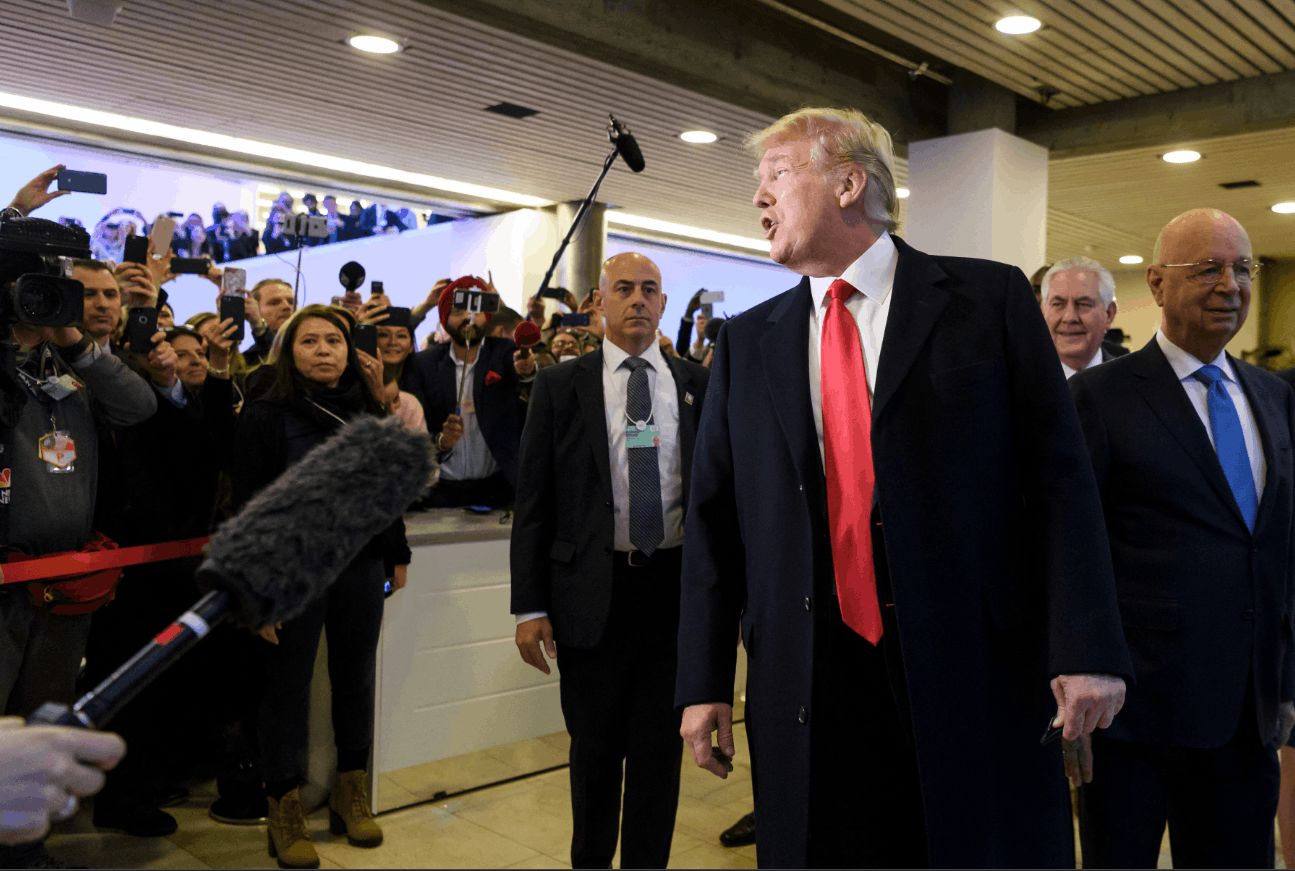
Seven of India’s most influential CEOs will meet US President Donald Trump at a closed door reception during the World Economic Forum in Davos. The interaction signals a deepening phase of India US corporate diplomacy, with leaders from technology, manufacturing, finance, telecom, and consumer sectors present. The meeting reflects India’s rising economic weight and the strategic importance of Indian capital, talent, and markets in global decision-making. For investors and global businesses, this Davos moment reinforces India’s shift from emerging opportunity to core economic partner.
Introduction
The World Economic Forum in Davos has long been where global power, capital, and policy quietly intersect. This year, India’s presence is louder and more confident than ever. Seven of the country’s most powerful corporate leaders are set to meet US President Donald Trump at an exclusive reception, placing Indian business leadership at the heart of global economic conversations. This is not symbolic networking. It reflects India’s expanding role in technology supply chains, financial systems, industrial manufacturing, and digital infrastructure. For India focused investors, global corporations, and policymakers, this interaction offers insight into where capital flows, trade priorities, and cross border partnerships may move next.
Latest Update
- Several Indian business leaders attending Davos have expanded their international real estate footprints, with increased interest in Switzerland, London, and New York residences for long term global operations.
- Private aviation movements and luxury hospitality bookings linked to Indian delegations have surged, highlighting the scale and seriousness of India’s corporate participation.
- Indian conglomerates represented at Davos are actively exploring new investments in data centers, green energy campuses, and logistics parks across North America and Europe.
- High profile public appearances by Indian CEOs at global panels have reinforced India’s positioning as a present day growth engine rather than a future promise.
Why are Indian CEOs meeting Donald Trump at Davos considered a high impact event?
The meeting is high impact because it places Indian corporate leadership in direct dialogue with US policy power at a time of shifting global trade, technology realignment, and geopolitical tension. Davos receptions are invitation-only and strategically curated. India’s presence signals trust, relevance, and influence in shaping future economic rules.
Davos is not just a conference. It is a negotiation arena. When CEOs meet a sitting or former US President in this setting, discussions often extend beyond optics into policy expectations, investment signals, and long term cooperation frameworks. For Indian firms, this access helps position them as stable partners amid global uncertainty.
The timing is equally critical. The world is adjusting to tighter capital, new tariff threats, and supply chain restructuring. India’s CEOs represent sectors that directly benefit from US India alignment such as IT services, manufacturing, fintech, and energy.
This interaction also reassures global investors. It shows that Indian leadership has both market scale and diplomatic access, a combination that reduces perceived risk.
Read Also: AI Data Centers Drive Record Profits for Asian Power Equipment Makers
Who are the seven Indian CEOs attending the Trump reception, and what sectors do they represent?
The seven Indian CEOs represent technology, manufacturing, finance, telecom, and consumer businesses. Together, they cover a large share of India’s market capitalization, employment, and overseas investment footprint.
| CEO Name | Company Group | Primary Sector | Global Presence |
| N Chandrasekaran | Tata Sons | Conglomerate | Over 100 countries |
| Salil Parekh | Infosys | IT Services | North America Europe Asia |
| Srini Pallia | Wipro | IT Consulting | Global enterprise clients |
| Sunil Bharti Mittal | Bharti Enterprises | Telecom | India Africa Europe |
| Anish Shah | Mahindra Group | Manufacturing Mobility | Global automotive markets |
| Sanjiv Bajaj | Bajaj Finserv | Financial Services | India focused with global capital links |
| Hari S Bhartia | Jubilant Bhartia Group | Consumer Pharma | North America Europe |
This diversity matters. It allows India to speak across multiple economic priorities rather than a single sector narrative.
How does India’s largest-ever Davos delegation change its global perception?
India’s largest ever Davos delegation signals that the country is no longer observing global policy debates but actively shaping them. The presence of ministers, chief ministers, and CEOs presents India as coordinated, confident, and ready to lead.
Historically, Davos participation from India was often exploratory. This time, it is assertive. With over 100 corporate leaders present, India is presenting itself as a solution provider to global growth challenges.
This scale also influences perception. Global investors interpret large coordinated delegations as signs of policy stability and execution capacity. For real estate, infrastructure, and industrial investors, this lowers entry hesitation.
India is positioning itself not as an alternative to China but as a complementary global growth pillar with democratic stability and digital scale.
Read Also: LNG Prices Face Pressure in 2026 as Global Supply Surges
What are the key themes expected in Trump’s Davos address relevant to Indian businesses?
Trump’s address is expected to focus on domestic economic priorities, trade enforcement, housing affordability, and strategic energy security. Indian businesses are directly linked to each of these themes through services, manufacturing, and capital investment.
Housing affordability in the US connects to Indian IT and construction linked outsourcing. Trade enforcement affects Indian exporters and manufacturers. Energy security opens doors for Indian renewable and infrastructure firms.
Indian CEOs attending the reception are well positioned to align their expansion plans with these policy directions, reducing friction and improving access.
This is why the meeting matters beyond headlines. It aligns corporate strategy with political intent.
How does this meeting impact India US trade and investment flows?
High-level CEO engagement with US leadership improves predictability in trade and investment decisions. It helps smooth regulatory concerns and builds trust at the top.
When CEOs directly communicate employment generation, capital investment, and technology transfer plans, it influences how policies are framed. This often leads to softer enforcement or tailored cooperation.
India US trade has grown steadily, and such meetings help prevent sudden shocks. They also encourage bilateral investments in manufacturing hubs, data centers, and financial services.
For Indian investors, this reduces geopolitical discounting in valuations.
What does this Davos interaction mean for Indian real estate and infrastructure investors?
Global visibility of Indian CEOs strengthens confidence in India-linked real estate, logistics, and infrastructure investments. International capital often follows leadership credibility.
Many Indian conglomerates represented at Davos are large buyers of commercial real estate, industrial land, and global office campuses. Their expanding presence increases demand for Grade A assets.
For Housivity readers, this translates into stronger long term fundamentals for Indian commercial property, tech parks, and mixed use developments.
Cross-border confidence also improves foreign institutional participation in Indian real estate investment trusts.
Read Also: Gold Hits Record High as US-EU Trade Tensions Escalate
How does India compare with other countries represented at the Trump reception?
India stands out for its balanced representation across sectors and public private alignment, unlike many countries represented primarily by finance or energy firms.
| Region | Representation Style | Strategic Focus |
| India | Multi sector CEOs and government | Growth partnerships |
| Europe | Policy heavy leadership | Trade stability |
| Middle East | Energy focused executives | Capital deployment |
| United States | Finance tech consulting | Policy influence |
This balance strengthens India’s negotiating position and narrative.
Why does this matter for global markets and investors?
Markets react to access and alignment. When Indian CEOs gain direct engagement with US leadership, risk perception reduces and capital confidence increases.
This can influence stock valuations, foreign inflows, and partnership announcements. Global funds often read Davos signals closely.
India’s consistent presence in high level forums improves its investment brand. Over time, this lowers cost of capital.
For long term investors, this is a structural positive rather than a short term event.
Key Takeaways
- Seven top Indian CEOs meeting Donald Trump highlights India’s global economic influence
- The interaction strengthens India US corporate and policy alignment
- India’s largest ever Davos delegation signals confidence and leadership
- Positive implications for trade, real estate, and long term investment flows
Frequently Asked Questions
Why are Indian CEOs meeting Donald Trump at Davos?
They are meeting to strengthen corporate diplomacy, align investment priorities, and engage directly with US leadership during a strategic global forum.
Who invited the CEOs to the reception?
The reception invitations were issued by the White House to a select group of global corporate leaders.
Is this meeting only symbolic?
No. Davos receptions often lead to policy alignment, investment discussions, and long term cooperation frameworks.
How does this affect India US trade?
It improves trust and predictability, reducing friction in trade and investment decisions.
Does this impact Indian real estate markets?
Indirectly yes. Strong global confidence in Indian leadership supports capital inflows and commercial real estate demand.
Why is India’s delegation at Davos important?
It positions India as a current growth leader rather than a future opportunity.
Which sectors benefit most from this interaction?
Technology, manufacturing, finance, energy, and infrastructure sectors benefit the most.
How do global investors view such meetings?
They see them as signals of stability, access, and long term partnership potential.
Will this lead to new investments?
Such engagements often precede investment announcements and strategic partnerships.
Why does Davos still matter?
Davos remains a key platform where informal dialogue shapes formal global decisions.
Conclusion
The meeting between seven of India’s most powerful CEOs and Donald Trump at Davos is more than a headline moment. It reflects India’s evolution into a central pillar of global economic strategy. With representation across technology, finance, manufacturing, and consumer sectors, India is presenting itself as stable, scalable, and indispensable. For investors, businesses, and policymakers, this interaction reinforces confidence in India’s leadership and long-term growth trajectory. As global markets navigate uncertainty, India’s seat at the highest tables of influence is no longer aspirational. It is established.