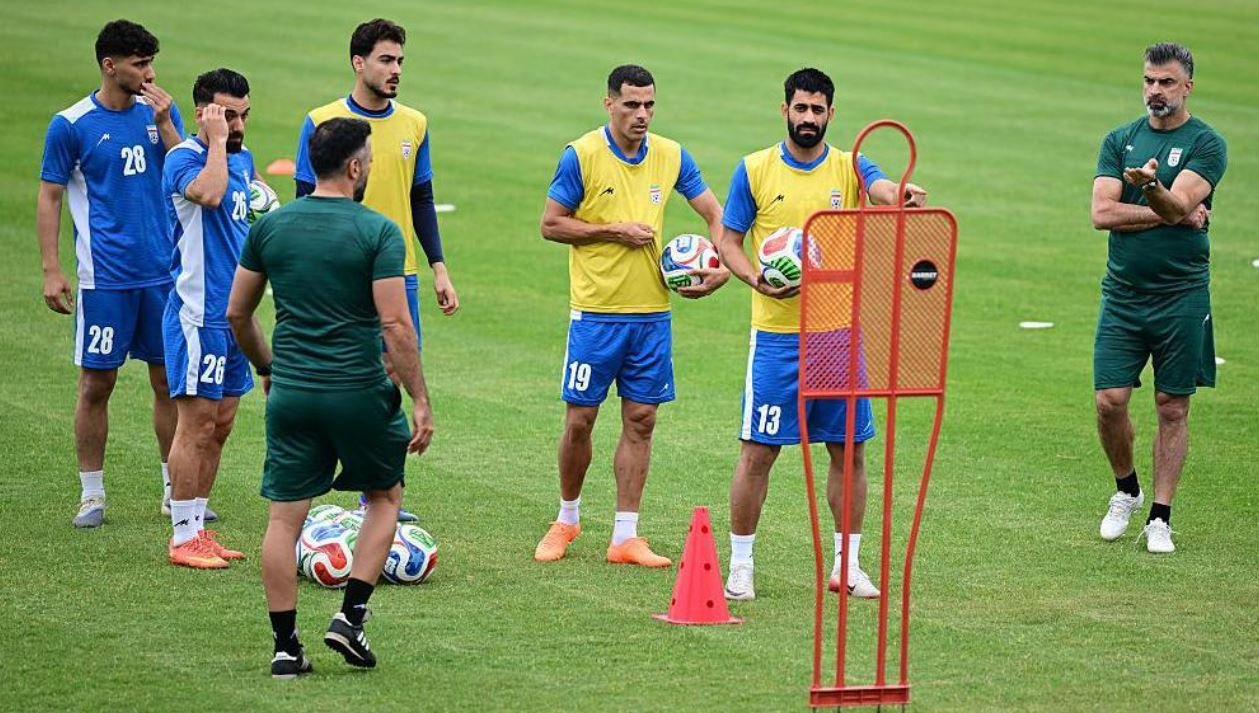
An unprecedented diplomatic workaround has broken a weeks-long logistical deadlock threatening a major Middle Eastern squad’s tournament availability. Iranian Foreign Minister Seyed Abbas Araghchi announced on Sunday that entry permits for members of Iran’s national football team are officially expected within the next 48 hours.
This fast-tracked resolution addresses intense international uncertainty surrounding the squad’s physical participation in the 2026 FIFA World Cup. To bypass intense security bottlenecks, Iranian diplomats operating in Turkey established a direct operational channel with the Mexican Embassy in Ankara. Under this newly brokered administrative framework, Mexican authorities agreed to waive traditional in-person fingerprinting requirements. Consequently, this allows a single designated representative to collect the processed documentation on behalf of the entire athletic delegation, preventing further travel delays.
+------------------------------------------------------------+
|             THE 2026 LOGISTICAL WORKAROUND NETWORK         |
+------------------------------------------------------------+
|                                                            |
|  [Squad Training Camp: Antalya, Turkey]                    |
|         │                                                  |
|         ▼                                                  |
|  [Diplomatic Channel: Mexican Embassy, Ankara]             |
|         │ (Fingerprinting waived / Bulk pickup cleared)     |
|         ▼                                                  |
|  [Official Base Relocation: Tijuana, Mexico]               |
|         │ (Approved by FIFA to avoid US overnight stay)    |
|         ▼                                                  |
|  [Match Day Transit: Commute Across Border]                |
|         • Game 1: Los Angeles, USA                         |
|         • Game 2: Los Angeles, USA                         |
|         • Game 3: Seattle, USA                             |
|                                                            |
+------------------------------------------------------------+
To optimize international logistics under severe time constraints, sports administrators rely on the 3-Layer Performance Grid. This operational framework isolates transit variables, accommodation security, and training ground consistency into independent planning layers. By executing the administrative phase via proxy diplomats in a neutral country, the federation successfully cleared the primary logistical layer without interrupting the squad’s active physical conditioning.
Geopolitical Tensions Force Base Camp Relocation to Tijuana Border Zone
The complex diplomatic maneuvering highlights the deep structural challenges of organizing global sports events during periods of heightened geopolitical friction. While the squad successfully attended initial visa appointments at both the U.S. and Canadian embassies in Ankara during late May, administrative friction left the team without immediate U.S. entry permits.
These persistent complications ultimately forced the Iranian Football Federation to abandon its original plans to base its training operations in Tucson, Arizona. Following a swift evaluation of alternative options, FIFA formally approved an emergency request to relocate the team’s tournament headquarters to Tijuana, Mexico.
According to statements from Mexican President Claudia Sheinbaum, the geopolitical compromise explicitly prevents the team from staying overnight within United States territory. The strategic framework dictates that the Iranian squad will remain based at their private facilities in Mexico, flying directly across the border solely to compete in their three scheduled Group G matches before immediately returning to their secure camp.
READ ALSO
Kyle Busch’s Final Dover Victory Looks Prophetic as NASCAR Future Unfolds
NASCAR • Kyle Busch • Dover Motor Speedway
Technical Roster Finalized as Countdown to Group G Matches Accelerates
Despite the severe administrative disruption occurring off the pitch, the technical coaching staff has successfully finalized the official 26-man roster heading to North America. The selected group balances veteran international experience with highly efficient domestic league talents.
Insights gathered from historical tournament preparations indicate that sudden geographical changes radically test a squad’s internal stability. Long-haul transit strategies require absolute precision to mitigate the fatigue of constant international border crossings during high-stakes group play.
   COMPETITIVE ROADMAP: GROUP G COMPILED SCHEDULE
   ┌────────────────────────────────────────────────────────┐
   │ ⚽ MATCH 1: VS NEW ZEALAND                              │
   │    Location: Los Angeles | Target: Secure Opening Win  │
   ├────────────────────────────────────────────────────────┤
   │ ⚽ MATCH 2: VS BELGIUM                                  │
   │    Location: Los Angeles | Target: Tactical Containment │
   ├────────────────────────────────────────────────────────┤
   │ ⚽ MATCH 3: VS EGYPT                                    │
   │    Location: Seattle     | Target: Group Qualification │
   └────────────────────────────────────────────────────────┘
The team’s competitive travel burden is significantly reduced by the Tijuana base selection. Football federation officials noted that commuting to Los Angeles involves a short 55-minute flight. This rapid transit window offers far better recovery metrics than commuting from the original Arizona site, turning a severe diplomatic restriction into an outright physical advantage for the players.
Shrinking Timelines Limit Operational Adjustments for Team Melli
With the tournament opening match scheduled for June 11, the organizational window to finalize travel, housing, and training logistics has contracted significantly. While FIFA President Gianni Infantino personally issued institutional guarantees regarding tournament access, the practical delivery of actual documents remains the ultimate benchmark for success.
Analysis of standard team acclimatization phases underlines that elite athletes require a minimum of seven days at a local base camp to adjust to local time zones and microclimates. Any further delay in issuing the remaining multi-entry permits will directly compress this vital training window.
| Logistical Milestones | Initial Planned Status | Relocation Phase Adjustments | Active Operational Status (June 2026) |
| Squad Base Location | Tucson, Arizona, USA | Tijuana, Baja California, Mexico | Base fully operational in Mexico |
| Visa Application Hub | In-Person Ankara Interviews | Turkish-Mexican Proxy Channel | Visas expected in 48 hours |
| Match Transit Strategy | Domestic Interstate Travel | Short-Haul International Commutes | 55-minute flights to California |
| Primary Group Matches | Group G Fixtures Secured | No Structural Changes to Schedule | Matches set for LA and Seattle |
The upcoming hours remain entirely critical for Team Melli’s tournament prospects. If Foreign Minister Araghchi’s 48-hour diplomatic resolution holds, the team can immediately board its direct flights from Turkey to Mexico. This would successfully conclude one of the most complex administrative standoffs in modern sports history right before the whistle blows.
READ ALSO
Alex Caruso’s Chaos-Fueled Performance Stuns Wembanyama and Lifts OKC
NBA Playoffs • Alex Caruso • Victor Wembanyama
Key Takeaways
- Visas expected within 48 hours following an emergency diplomatic proxy agreement.
- Fingerprinting requirements waived by Mexico to accelerate bulk documentation processing.
- Base camp relocated to Tijuana after US authorities restricted overnight stays.
- Short-haul 55-minute flights will transport players to matches in California.
- June 11 tournament start leaves a minimal operational window for final travel.
Frequently Asked Questions
Why did the Iranian national team relocate its World Cup base camp to Mexico?
The team moved its base camp to Tijuana, Mexico, because ongoing visa delays and geopolitical friction made their original site in Tucson, Arizona, unviable. Additionally, US authorities requested that the team stay overnight outside of United States borders during the tournament.
How did diplomats resolve the fingerprinting bottleneck for the squad?
Iranian diplomats stationed in Turkey coordinated a workaround directly with the Mexican Embassy in Ankara. The embassy agreed to completely waive individual fingerprinting requirements, allowing a single designated federation official to collect the entire team’s visas at once.
Where will Iran play its group stage matches during the 2026 World Cup?
Iran is placed in Group G and will play all three of its group stage matches on United States soil. Their first two matches are scheduled to take place in Los Angeles, followed by their final group fixture against Egypt in Seattle.
What happens if the 48-hour visa window faces further administrative delays?
If the visas are not delivered within the promised timeline, the Iranian delegation faces severe disruption to its final travel logistics. This would significantly reduce their acclimatization and training time at the newly established Tijuana base camp before the tournament begins on June 11.