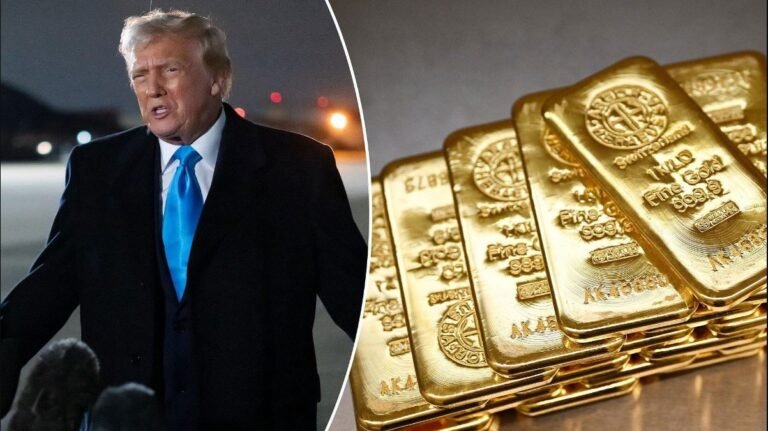
Gold and silver have eased from historic highs after a powerful rally driven by fears over Federal Reserve independence, China export controls, and geopolitical stress. Prices cooled when President Donald Trump paused new tariffs on critical minerals, reducing immediate trade anxiety. Despite the pullback, analysts remain confident that long term structural forces still favor higher precious metal prices. Gold near record levels and silver supply tightness continue to attract global investors seeking stability.
Introduction: Why are gold and silver pulling back after hitting record highs?
Gold and silver surged to unprecedented levels as investors reacted to political uncertainty, central bank concerns, and global trade friction. The rally reflected a flight to safety, with precious metals acting as a hedge against policy instability and supply disruptions. However, markets paused when tariff threats were temporarily softened, prompting short term profit booking.
This retreat does not signal weakness. Instead, it highlights how sensitive precious metals are to policy signals and macro headlines. For investors tracking global assets, gold and silver remain critical indicators of confidence in institutions, currencies, and future growth. Understanding the forces behind this move is essential for portfolio planning.
Latest News Update
- Gold and silver prices cooled after a sharp rally as investors adjusted positions following signals of reduced immediate trade pressure. The pause in tariff escalation eased short term fear driven buying.
- Global central banks publicly reaffirmed the importance of monetary independence, reinforcing confidence in long term inflation control even as political tensions persist.
- China tightened export controls on silver, intensifying supply concerns and reinforcing silver’s role as a strategic industrial and investment metal.
- Institutional investors increased allocations to precious metals related assets, reflecting continued demand despite short term price volatility.
Why did gold and silver reach record highs before retreating?
Gold and silver reached record highs due to a convergence of political risk, central bank credibility concerns, and supply disruptions. Investors rushed into precious metals as safe haven assets amid uncertainty around interest rates and global trade. The subsequent retreat followed a temporary easing of tariff threats, reducing immediate panic.
Gold touched a record price above $4,642 per ounce as markets reacted to unprecedented developments involving the Federal Reserve leadership. Silver surged past $93 per ounce, driven not only by safe haven demand but also by structural supply shortages.
When tariff plans were paused, risk sentiment improved slightly. This encouraged profit taking, especially among short term traders. Long term investors largely held positions, viewing the dip as consolidation rather than reversal.
Read Also: European Stocks Hit Record Highs Despite Trump’s Iran Tariff Threat
How did the criminal probe into the Federal Reserve chair impact markets?
The criminal probe into the Federal Reserve chair shook market confidence by raising concerns over central bank independence. Investors interpreted the development as a threat to policy stability, pushing demand for gold and silver higher. Precious metals benefited as trust in traditional financial governance weakened.
The investigation linked to congressional testimony and renovation spending was described as unprecedented by the Fed chair. Global central bank leaders responded with rare public support, emphasizing that independence is essential for economic stability.
This show of solidarity reinforced the narrative that political pressure on monetary policy increases long term inflation risk. Gold historically performs well when central bank credibility is questioned, explaining the strong market reaction.
What role did China export controls play in the silver rally?
China export controls significantly tightened global silver supply, amplifying price gains. New licensing rules restricted exports to a limited group of large producers, placing much of the global refined supply under state oversight. This intensified concerns of scarcity.
China controls a large share of refined silver exports used in electronics, solar panels, and batteries. By limiting exporters, the policy created bottlenecks that pushed buyers to pay premiums, especially in Asian markets.
Silver is both an investment and industrial metal. This dual role makes it more sensitive to supply shocks than gold, explaining why silver prices moved more aggressively.
Read Also: China’s Euro Settlements Surge as Firms Pivot from U.S. Trade
How did Trump tariff decisions influence the pullback?
The decision to pause tariffs on critical minerals reduced immediate trade fear, triggering a pullback in precious metals. Investors reassessed worst case scenarios, leading to short term selling. However, broader uncertainty remains unresolved.
The announcement signaled willingness to negotiate rather than escalate. Markets responded by rotating partially out of defensive assets like gold and silver.
Silver fell over 7 percent from its peak, while gold eased modestly. The reaction highlights how policy headlines can quickly alter market psychology even when fundamentals remain strong.
What do current price trends tell investors?
Current price trends suggest consolidation rather than collapse. Gold remains near historic highs after a strong yearly performance, while silver shows exceptional momentum. Volatility reflects sensitivity to news, not weakening demand.
| Metal | Recent Peak Price | Year to Date Gain | Key Driver |
| Gold | $4,642 per ounce | 7 percent | Safe haven demand |
| Silver | $93 per ounce | 25 percent | Supply constraints |
Gold gained strongly after a massive rally in the previous year. Silver posted its strongest start to any year on record, reflecting both investment and industrial demand.
Is silver now more attractive than gold?
Silver currently offers higher upside potential due to tighter supply and industrial demand. However, it also carries higher volatility than gold. Investors must balance risk tolerance with growth expectations.
| Factor | Gold | Silver |
| Volatility | Lower | Higher |
| Industrial Use | Limited | High |
| Supply Risk | Moderate | High |
| Safe Haven Role | Strong | Moderate |
Silver’s premium pricing in Shanghai reflects acute supply stress. Gold remains the preferred hedge for conservative investors seeking stability.
Read Also: Worthington Steel Announces $2.4 Billion Acquisition of Kloeckner & Co
What are analysts forecasting next for gold and silver?
Analysts remain bullish, projecting gold near $5,000 per ounce and silver close to $100 per ounce. Forecasts are based on sustained geopolitical risk, monetary easing expectations, and structural supply limits.
Major financial institutions see momentum carrying into the next cycle. Silver is viewed as the tighter market, with physical shortages driving regional premiums.
Even after pullbacks, long term demand drivers remain intact, supporting higher average prices.
How should investors position portfolios now?
Investors should view the pullback as an opportunity to rebalance rather than exit. Precious metals continue to provide diversification and inflation protection. Allocation should align with risk appetite.
- Long term investors may add gradually on dips.
- Conservative portfolios can favor gold for stability.
- Growth oriented investors may consider silver for higher upside.
Precious metals can complement real assets and global equity exposure, especially during policy uncertainty.
Key Takeaways
- Gold and silver pulled back after easing trade fears, not weakening fundamentals.
- Central bank independence concerns fueled safe haven demand.
- China export controls tightened silver supply.
- Analysts remain bullish on long term price targets.
Frequently Asked Questions
Why did gold prices fall after hitting a record?
Gold eased as immediate tariff fears declined, leading to profit taking. Long term demand remains strong.
Is silver more volatile than gold?
Yes. Silver reacts more sharply to supply and industrial demand changes.
Do central bank issues really affect gold prices?
Yes. Trust in monetary policy strongly influences safe haven demand.
Will gold reach $5,000 per ounce?
Several analysts project this level if current macro trends persist.
Why is China important to the silver market?
China controls a large share of refined silver exports used globally.
Is now a good time to invest in precious metals?
For long term investors, pullbacks can offer entry opportunities.
How does silver benefit from green energy growth?
Silver is critical in solar panels and electronics, boosting demand.
Can precious metals protect against inflation?
Historically, gold and silver act as inflation hedges.
Conclusion
Gold and silver stepping back from record highs reflects market recalibration, not a loss of confidence. Political uncertainty, supply constraints, and central bank credibility continue to support long term demand. For investors navigating volatile global conditions, precious metals remain a strategic asset class.