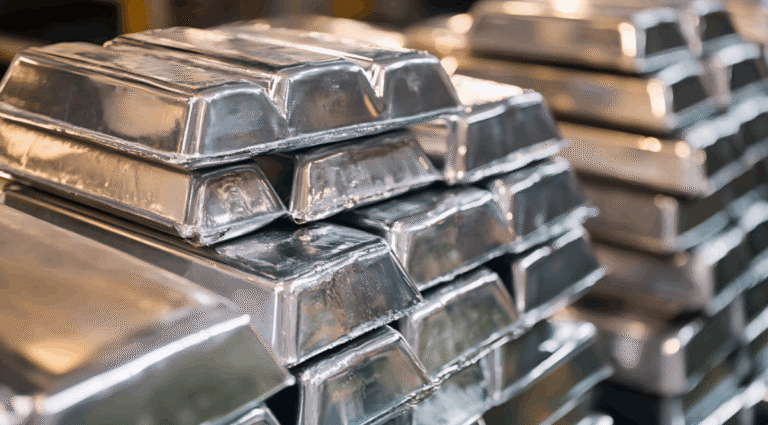
China has implemented strict export licensing requirements on silver, reclassifying the metal as a strategic resource to support its domestic renewable energy and electric vehicle sectors. This policy shift has caused silver prices in Shanghai to surge to approximately $125 per ounce, representing a massive 17% premium over the Indian market, where prices hover around $103 to $108 per ounce.
The divergence is fueled by a combination of Chinese supply protectionism and India’s recent decision to slash import duties. This creates a unique arbitrage and supply chain challenge for global industries. Searchers are increasingly looking for how these regional imbalances affect global tech manufacturing and investment portfolios.
Latest Update
- The Shanghai Gold Exchange continues to see massive physical delivery demands as buyers rush to secure silver following the new strategic resource designation. This high demand is depleting local stocks and pushing regional prices significantly higher than global benchmarks.
- Market analysts report that nearly one quarter of COMEX registered inventory has vanished within a single week. This rapid decline in available physical silver is intensifying fears of a global liquidity crunch in the precious metals sector.
- Major industrial players are expressing deep concern over the long term availability of silver for high tech manufacturing. Comments from industry leaders suggest that these export restrictions could delay production timelines for solar panels and advanced electronics worldwide.
- India is witnessing a surge in official silver imports following the drastic reduction in customs duties from 15% to 6%. This legislative move has successfully improved market transparency and cushioned Indian manufacturers from the extreme price spikes seen in China.
How do China’s new export licenses affect silver prices?
China’s new export licensing system restricts the outward flow of silver by allowing only 44 state-approved firms to ship the metal overseas. These firms must meet massive production thresholds of at least 80 tonnes annually and maintain credit lines exceeding $30 million. By bottlenecking the supply that can leave the country, Beijing has effectively trapped silver within its borders.
The immediate result is a localized price explosion on the Shanghai Gold Exchange. Because China produces roughly 80% of the world’s solar panels, the demand for silver’s high electrical conductivity is insatiable within their domestic borders. When the government limits how much silver can be sold to international buyers, it creates a silver fortress effect.
This policy also creates a tiered market where only the largest, most financially stable companies have a seat at the table. Smaller miners and secondary refiners are now forced to sell their products to the approved 44 giants or keep them within the domestic market. This consolidation of power allows the Chinese government to monitor and control every ounce of silver.
- Strict licensing limits the number of eligible exporters to just 44 large firms.
- High production quotas ensure that only major industrial players control the supply.
- Domestic prices decouple from global spot rates due to restricted outward flow.
- Physical delivery requirements in Shanghai prevent paper trading from masking actual shortages.
US Mortgage Rates Today: Current Averages, Trends, and Market Outlook
Why did Beijing designate silver as a strategic resource?
Beijing designated silver as a strategic resource because it is indispensable for the New Three Industries: solar cells, lithium-ion batteries, and electric vehicles. Silver possesses the highest electrical and thermal conductivity of any element, making it a critical component in conductive pastes. Without a steady supply, China’s dominance in the global renewable energy market would be threatened.
The strategic designation reflects a broader shift in geopolitical economics, where metals are given the same importance as oil. By ensuring domestic silver stays in China, the government is insulating its massive manufacturing hubs from global price shocks. This move is particularly vital as AI infrastructure expands and requires more high-end semiconductors.
Furthermore, the physical delivery rules at the Shanghai Gold Exchange mean that silver contracts must be settled with actual metal. This prevents the paper silver market from suppressing prices and reflects the true physical scarcity of the resource. As domestic buyers take more metal off the market, the available supply for international investment shrinks even further.
Authorized Silver Exporter Requirements (2026-2027)
| Requirement Metric | Criteria for Authorization |
|---|---|
| Number of Authorized Firms | 44 Total (State-Approved) |
| Minimum Annual Production | 80 Tonnes |
| Minimum Credit Line | Exceeding $30 Million |
| Export Period | Two-Year Window (2026-2027) |
| Strategic Goal | Domestic Green Tech Security |
Why is silver cheaper in India compared to China?
Silver is significantly cheaper in India because the Indian government slashed import duties from 15% to 6% in late 2025. This 9% reduction in taxes acted as a massive price cushion for the local market. While China is restricting supply to keep metal in, India is lowering barriers to bring metal in.
This policy divergence has had a profound impact on market dynamics. In India, silver is not just an industrial metal but a major investment and cultural asset. By reducing the duty, the government has incentivized legal imports over smuggling, which has flooded the official market with liquidity.
Additionally, the Indian solar industry is growing, but it does not yet consume silver at the same massive scale as China’s manufacturing base. This means there is less immediate industrial pressure on physical stocks in India. However, the price gap is so wide that it has sparked discussions about regional arbitrage opportunities.
Regional Price Comparison Table
| Market Location | Average Price (USD/oz) | Policy Stance | Market Premium/Discount |
|---|---|---|---|
| Shanghai (China) | $125.00 | Strict Export Curbs | 17% Premium over India |
| Mumbai (India) | $103.00 – $108.00 | Import Duty Slashed to 6% | Market Standard |
| New York (COMEX) | $113.00 | Open Market / High Volatility | Rising Mid-range |
What are the global implications of the silver supply deficit?
The global silver market is currently facing its sixth consecutive year of structural deficit. This means that the demand for silver consistently exceeds the total mine production and recycling supply. With a cumulative shortage reaching nearly 820 million ounces, the market is reaching a breaking point.
Mining production has remained stagnant because silver is often a byproduct of lead, zinc, and copper mining. Even if silver prices skyrocket, miners cannot easily turn on the tap to produce more. As a result, the supply is inelastic while the demand from the solar and EV sectors continues to grow.
Industrial users outside of China are now looking at alternative materials, but silver’s unique properties make it difficult to replace. In the world of AI, even a tiny drop in conductivity can lead to massive performance losses. The structural deficit is leading to a physical squeeze where users are willing to pay any price.
- Global mine production remains flat at approximately 813 million ounces.
- Cumulative deficits have removed 820 million ounces from reserves since 2021.
- AI infrastructure and 5G expansion are creating new, non-negotiable demand.
- Secondary recycling is not yet efficient enough to bridge the supply gap.
How did Elon Musk and the Kobeissi Letter react to the silver surge?
Elon Musk reacted to China’s export restrictions on X by stating, “This is not good.” He highlighted that silver is an essential component in numerous industrial processes, including Tesla’s own electric vehicles. His reaction amplified the concerns of tech manufacturers who fear rising raw material costs.
The Kobeissi Letter described the price action as “absolute insanity.” They pointed out that the $125 per ounce price in Shanghai compared to lower prices in the West is a signal of a systemic crisis. They highlighted the disconnect between paper silver prices and the real price of physical bullion.
These reactions suggest that the market is entering a phase of price discovery that could be painful for industrial consumers. When high-profile figures and market analysts agree that a supply chain is broken, it often leads to increased hoarding. The disappearance of COMEX inventory serves as a grim validation of these warnings.
European Bonds Gain Favor as Global Investors Flee Japan and UK Turmoil
Key Takeaways
- The Premium: Silver in China is 17% more expensive than in India due to export bans.
- Policy Pivot: China reclassified silver as a strategic resource to protect its solar and EV industries.
- India’s Advantage: India lowered import duties to 6%, making its silver market more competitive.
- Structural Shortage: The world has seen a silver deficit for 6 straight years, totaling 820 million ounces.
- Inventory Crisis: Over 25% of COMEX silver inventory vanished in one week, signaling a physical supply squeeze.
Frequently Asked Questions
What caused the 17% silver price premium in China?
The premium is caused by China’s January 1, 2026, export licensing rule. By limiting exports to only 44 state-approved firms, China trapped its supply domestically. High demand from Chinese solar manufacturers pushed local prices to $125 per ounce, well above global rates.
How much does silver cost in India right now?
As of late January 2026, silver in India is trading between $103 and $108 per ounce. Prices reflect the recent reduction in import duty from 15% to 6%. This has helped keep the metal more affordable for Indian jewelry makers and industrial users.
Why did China restrict silver exports?
China restricted silver exports to secure its domestic supply for the renewable energy sector. Silver is vital for solar panels and electric vehicles. Beijing reclassified silver as a strategic resource to ensure its factories always have access to the metal.
Is there a global silver shortage in 2026?
Yes, there is a significant structural silver deficit in 2026. This is the sixth consecutive year where demand has outstripped supply. Since 2021, the cumulative shortage has reached approximately 820 million ounces due to green tech demand.
What are the requirements for Chinese silver exporters?
Only 44 state-approved companies are authorized to export silver for the 2026-2027 period. To qualify, a firm must produce at least 80 tonnes of silver annually. They must also hold a credit line exceeding $30 million to manage large-scale trades.
Why did India cut its silver import duty?
The Indian government slashed the import duty from 15% to 6% in late 2025 to curb smuggling. By making legal imports cheaper, India increased market liquidity. This helped protect its local economy from the extreme price premiums seen in China.
What happened to COMEX silver inventory in January 2026?
In the final week of January 2026, approximately 26% of all COMEX-registered silver inventory was withdrawn. This massive movement indicates that industrial buyers are taking actual delivery of silver. They fear that the supply will soon become unavailable or much more expensive.
Does Elon Musk use silver in his businesses?
Yes, silver is used extensively in Tesla electric vehicles and solar tiles. Its superior conductivity makes it irreplaceable for high-performance electronics. Musk’s public concern about the export curbs underscores how critical silver is for sustainable transportation infrastructure.
Conclusion
The current divergence in silver prices between China and India is a landmark event. China’s decision to lock down its silver supply has created a massive 17% premium in Shanghai. This reflects the metal’s critical role in the future of green technology and industrial supremacy.
India’s proactive duty cuts have provided a necessary cushion for its domestic market. This showcases two very different approaches to resource management in an era of scarcity. Investors and manufacturers must now navigate a fragmented landscape where regional policies create sudden price gaps.
As the structural deficit enters its sixth year, the global market is recognizing silver’s true value. It is a vital industrial pillar for AI, solar energy, and electrification. The current premium is likely just the beginning of a larger global re-evaluation of this finite resource.