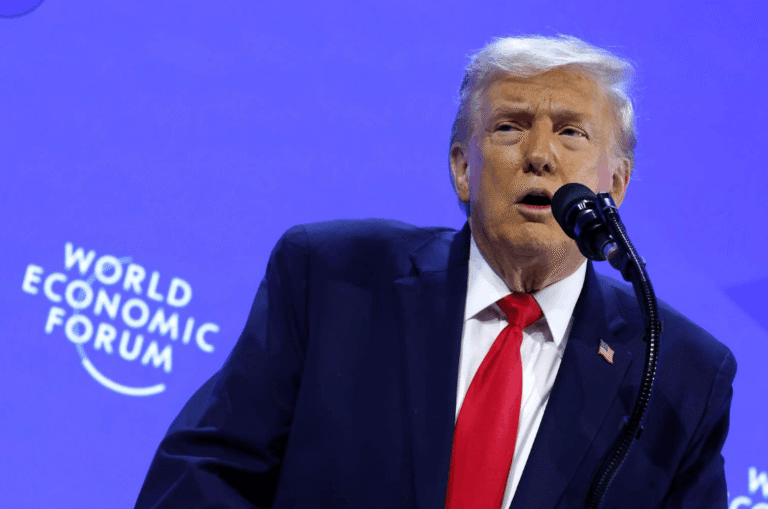
President Donald Trump withdrew his threat to impose a 200 percent tariff on French wine and Champagne after high-level discussions at the World Economic Forum in Davos. The proposal, initially framed as leverage over France’s stance on a Gaza peace initiative, sparked immediate backlash from global wine producers and American importers. Industry data showed such a tariff would sharply raise prices for US consumers while damaging American jobs. The reversal eased market anxiety but underscored how quickly geopolitics can disrupt global trade.
The global wine industry faced a sudden shock when President Donald Trump announced a potential 200 percent tariff on French wine and Champagne. The statement, made amid diplomatic tensions with France over Middle East policy, rattled producers, distributors, and retailers across continents. Within days, the threat was withdrawn following meetings at Davos, offering temporary relief. Yet the episode revealed how trade policy, geopolitics, and consumer markets are increasingly intertwined. For businesses and policymakers, the key question is no longer whether tariffs will be used, but how often uncertainty itself becomes a cost.
Latest Update
- Global wine markets stabilized after the tariff threat was withdrawn, with distributors resuming delayed contracts and shipments. Industry groups reported improved confidence but warned that policy volatility remains a major risk.
- US wine importers and restaurant associations emphasized that even short-lived tariff threats disrupt pricing strategies and inventory planning across the hospitality sector.
- European officials reiterated resistance to trade pressure tied to geopolitical disputes, reinforcing a broader trend toward defensive trade diplomacy.
- Market analysts noted rising search interest around wine tariffs and trade retaliation, signaling growing public concern about consumer price impacts.
Why did Trump threaten a 200 percent tariff on French wine?
Trump’s tariff threat was primarily a political pressure tactic aimed at France after President Emmanuel Macron declined to join a US-led Gaza peace framework. By targeting wine, one of France’s most visible exports, the administration sought symbolic leverage rather than purely economic gain. The move fit a broader pattern of using trade tools to influence foreign policy decisions.
The threat was announced during remarks in Florida, where Trump openly linked tariffs to diplomatic cooperation. French wine and Champagne were singled out due to their strong brand recognition in the US market. Wine has historically been vulnerable in trade disputes because it is politically sensitive and widely consumed.
From a policy perspective, the tactic reflected a transactional approach to diplomacy. Trade measures were framed not as long term economic strategy, but as immediate leverage. This approach raised alarms among economists who argue that such tactics blur the line between trade policy and foreign relations.
Read Also: Bank of England Tool Reveals Chinese Export Price Decline Amid Global Tariffs
How would a 200% tariff have affected wine prices and consumers?
A 200% tariff would have fundamentally restructured the American wine market by tripling the landed cost of imports and making luxury items like Champagne inaccessible for the average consumer. Data from VIVI Economics suggested that a bottle with a landed value of $11.80 would have instantly jumped by an additional $23.60 in taxes alone. This would have forced retailers to raise shelf prices by nearly 300% to maintain viable margins.
The impact would not have been limited to the price tag; it would have devastated the hospitality ecosystem. American bars and restaurants rely heavily on the high margins of wine sales to offset food costs. A sudden 200% tax would have led to:
- Massive contract cancellations for future vintages.
- Financial insolvency for boutique importers specializing in French regions.
- Significant job losses in the domestic logistics and retail sectors.
Interestingly, the “collateral damage” ratio was estimated at 4.52 to 1. This means that for every dollar the tariff took from a French producer, American companies would have lost over four dollars in economic activity. This lopsided impact made the tariff a “self-inflicted wound” in the eyes of trade analysts, as it targeted the very American businesses—wholesalers, retailers, and sommeliers that the administration aimed to protect through other economic policies.
Estimated Price Impact Table: Average French Wine Bottle
| Cost Component | Pre-Tariff Price (USD) | With 200% Tariff (USD) | Price Increase (%) |
|---|---|---|---|
| Landed Value | $11.80 | $11.80 | 0% |
| Import Duty/Tariff | $0.00 | $23.60 | New Cost |
| Estimated Retail Price | $24.99 | $72.45 | 190% |
What is the “Board of Peace” and why did France refuse to join?
The “Board of Peace” is a proposed international body designed by the Trump administration to oversee the reconstruction and disarmament of Gaza following a ceasefire. President Trump envisioned it as a high-level council where world leaders would contribute significant funding and political weight to stabilize the region. France declined to join because the board’s charter appeared to bypass the United Nations and lacked a clear multilateral legal framework.
President Macron’s refusal was rooted in a commitment to traditional diplomatic channels. French officials expressed concern that the “Board of Peace” was an “extravagant” attempt to privatize global peacebuilding, especially after reports surfaced that permanent seats on the board might require donations. Macron characterized the pressure to join as “vassalization” and insisted that Europe would not passively accept the law of the strongest.
This refusal triggered the wine tariff threat. By targeting a culturally and economically significant French export, Trump hoped to force a policy reversal. However, the “Board of Peace” eventually found members elsewhere, including several Central Asian and South American nations. The standoff highlighted a growing rift between the “America First” approach to regional conflicts and the European preference for collective, UN-based security measures.
Read Also: European Gas Prices Hit Seven Month High as Cold Snap Drains Storage
What role did the Davos talks play in reversing the tariff threat?
Meetings at the World Economic Forum in Davos provided a diplomatic off-ramp that allowed Trump to withdraw the tariff threat without appearing to concede publicly. High-level discussions with NATO leadership and European officials helped shift the focus toward broader strategic cooperation.
During Davos, French officials criticized what they described as economic blackmail. These remarks underscored Europe’s growing resistance to unilateral trade threats. Behind closed doors, however, discussions emphasized stability and alliance cohesion.
The reversal was announced through social media, signaling that while rhetoric remains aggressive, practical considerations still influence final decisions. Markets interpreted this as a sign that extreme tariff measures may remain negotiating tools rather than permanent policy.
Comparison: Impact on US vs. French Stakeholders
| Stakeholder Group | Primary Risk | Mitigation Strategy |
|---|---|---|
| French Producers | Loss of primary export market; surplus inventory. | Diversifying exports to Asian and domestic EU markets. |
| US Wine Importers | Bankruptcy; inability to honor existing contracts. | Adding force majeure clauses for tariffs in new contracts. |
| US Restaurants/Bars | Drastic margin compression; loss of wine-focused diners. | Switching to “by-the-glass” domestic alternatives. |
| American Consumers | Hyper-inflation of luxury and “everyday” imports. | Hoarding inventory or shifting to New World wines. |
What does this episode reveal about the US trade strategy under Trump?
The incident highlights a trade strategy that prioritizes leverage and signaling over predictability. Tariffs are framed as flexible tools rather than fixed policies, increasing uncertainty for global markets. This approach amplifies short-term influence but raises long term economic risks.
Supporters argue that such tactics force allies to engage more seriously with US priorities. Critics counter that frequent threats erode trust and discourage investment. For industries like wine, the cost of uncertainty can rival the cost of actual tariffs.
Economists warn that when uncertainty becomes routine, businesses begin to price in risk permanently. This leads to higher consumer prices even when tariffs are not enacted.
Read Also: AI Data Centers Drive Record Profits for Asian Power Equipment Makers
How did industry groups respond to the tariff threat?
Industry groups responded with immediate and coordinated opposition, warning that tariffs would harm American workers more than foreign producers. Statements emphasized that wine tariffs ripple through bars, restaurants, logistics firms, and tourism.
The Wine Origins Alliance and the Wine and Spirits Wholesalers of America both stressed that wine should not be used as leverage in unrelated geopolitical disputes. Their data-driven responses helped frame the issue as a domestic economic risk rather than a foreign policy tool.
This unified response played a role in shaping public perception and increasing pressure for a reversal.
Key Takeaways
- The tariff threat was politically motivated rather than economically strategic.
- US consumers and businesses would have faced the largest financial burden.
- Wine remains highly exposed to geopolitical tension.
- Davos diplomacy provided a face-saving exit.
- Trade uncertainty itself now carries measurable economic costs.
Frequently Asked Questions
Did Trump officially cancel the French wine tariff?
Yes, the proposed tariff was withdrawn after discussions at Davos, easing immediate trade tensions.
Would US wine prices have increased?
Yes, average bottle prices would have risen sharply, with estimates showing over 23 added per bottle.
Why target wine instead of other goods?
Wine is symbolic, highly visible, and politically sensitive, making it a common target in disputes.
Did France change its Gaza policy?
No, France maintained its position and criticized the tariff threat as coercive.
Are future wine tariffs still possible?
Yes, industry analysts warn that wine remains vulnerable to future trade pressure.
How did US businesses react?
Importers and restaurants warned of job losses and supply chain disruption.
What is the broader lesson for global trade?
Policy uncertainty can be as damaging as tariffs themselves.
Conclusion
The brief but intense tariff threat against French wine revealed how fragile global trade confidence has become. While the withdrawal offered short-term relief, it did not erase the underlying risk posed by unpredictable trade tactics. For the wine industry and beyond, the episode serves as a warning that geopolitical disputes can quickly spill into consumer markets. As governments increasingly use trade as leverage, businesses must adapt to an environment where uncertainty itself is a recurring cost. Stability, not spectacle, remains the most valuable currency in global commerce.