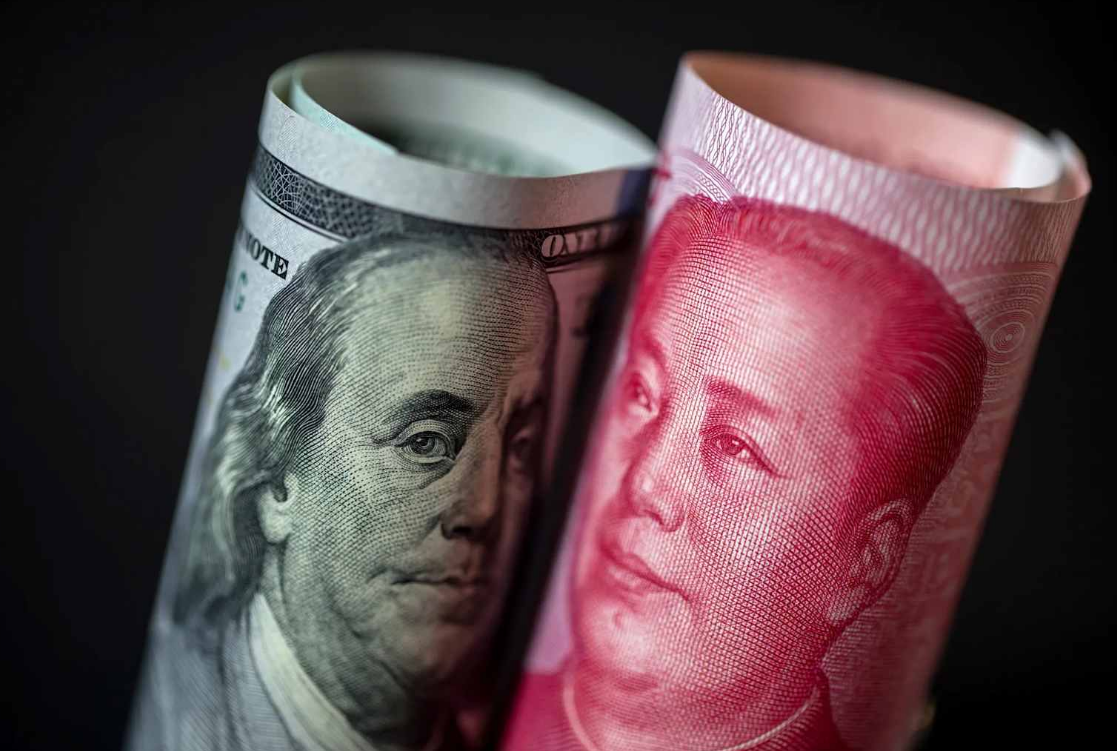
Asian currencies are weakening because sustained US dollar strength, capital outflows, and structural economic pressures are overpowering central bank interventions. The Indian rupee and South Korean won are under the most visible stress, despite policy support and verbal interventions. Foreign investor withdrawals, trade imbalances, and strong demand for dollars continue to drive volatility. Until global risk sentiment improves and dollar momentum fades, Asian currencies are likely to trade with a negative bias.
Across Asia, currency markets are facing renewed stress as the US dollar tightens its grip on global capital flows. The Indian rupee recently saw its sharpest single-day fall in weeks, while the South Korean won continues to hover near multi-year lows. Despite central bank actions, public sector bank dollar sales, and even rare verbal warnings from US officials, the greenback’s dominance remains intact. For investors, policymakers, and businesses, the message is clear. Short-term interventions are struggling against deeper structural and global forces.
Latest Update
- Asian currencies remain under pressure as dollar demand from global investors continues to rise, overwhelming regional stabilization efforts. Central banks are prioritizing financial stability while carefully managing foreign exchange reserves.
- The Indian rupee has seen heightened volatility as foreign institutional investors maintain selling pressure in equity markets. Public sector banks have stepped in periodically to smooth sharp intraday moves.
- In South Korea, retail investors continue to channel funds into overseas equities, adding to dollar demand. Policymakers are increasingly focused on curbing excessive currency volatility rather than targeting a specific exchange level.
- Regional market data shows weakening correlation between Asian equities and currencies, suggesting capital flows are becoming more sentiment driven. Analysts warn this could increase short-term currency swings.
Why are Asian currencies sliding despite central bank interventions?
Asian currencies are sliding because global dollar strength, driven by higher US yields and safe haven demand, is overpowering local interventions. Central banks can smooth volatility but cannot fully offset sustained capital outflows and trade imbalances. Structural weaknesses in domestic economies further limit the effectiveness of policy tools. As a result, interventions are buying time rather than reversing trends.
Central banks across Asia have stepped into currency markets repeatedly, but the impact has been limited. The core reason lies in the scale of global dollar demand. Higher US interest rates and resilient US growth continue to attract capital, draining liquidity from emerging Asian markets.
Interventions typically work best during periods of temporary volatility. In the current environment, pressures are persistent. Foreign investors are reallocating portfolios away from Asia, while import-related dollar demand remains strong. This creates a structural imbalance that daily interventions cannot easily resolve.
In addition, many Asian economies are prioritizing reserve preservation. Aggressive intervention risks depleting foreign exchange buffers, which could undermine long term confidence. As a result, policymakers are focusing on smoothing sharp moves rather than defending specific currency levels.
Read Also: Global Investors Shift Away from US Tech Giants as International Markets Gain Favor
What triggered the sharp fall in the Indian rupee?
The Indian rupee fell sharply due to a mix of foreign investor outflows, a widening trade deficit, and strong dollar demand. Global risk aversion and elevated crude oil prices added further pressure. Even with RBI-backed dollar sales, sentiment remained negative.
The rupee’s recent slide highlights how vulnerable emerging market currencies are to global shifts. Foreign institutional investors have been steadily reducing exposure to Indian equities, leading to sustained dollar outflows. At the same time, India’s merchandise trade deficit has widened, increasing demand for dollars from importers.
Energy imports play a key role. Higher crude oil prices directly raise dollar demand, putting immediate pressure on the rupee. This is particularly challenging for India, given its heavy reliance on imported oil.
While public sector banks have sold dollars on behalf of the Reserve Bank of India, these actions have only slowed the decline. Market participants remain cautious amid uncertainty over global trade negotiations and geopolitical risks.
How does a weaker rupee affect India’s economy and real assets?
A weaker rupee raises import costs, fuels inflation risks, and can pressure corporate margins. However, it also boosts export competitiveness and supports sectors earning in dollars. For real assets like property, the impact is mixed but can attract NRI interest.
Currency weakness has broad economic implications. On the negative side, imported inflation becomes a concern, especially for fuel and essential commodities. This can squeeze household budgets and complicate monetary policy decisions.
On the positive side, exporters benefit from improved price competitiveness. IT services, pharmaceuticals, and manufacturing exporters often see revenue gains when the rupee weakens. This can partially offset broader economic stress.
For real estate, especially premium residential and commercial assets, a weaker rupee can increase interest from NRIs. Dollar-denominated income converts into a higher rupee value, improving affordability and investment appeal.
Impact snapshot for India
| Area | Impact of a weaker rupee |
|---|---|
| Imports | Higher costs, inflation pressure |
| Exports | Improved competitiveness |
| Equity markets | Short-term volatility |
| Real estate | Potential rise in NRI demand |
Why is the South Korean won struggling despite strong fundamentals?
The South Korean won is under pressure mainly due to capital outflows driven by retail investors buying foreign assets. Structural challenges like aging demographics and high household debt also weigh on sentiment. These factors dilute the support from Korea’s trade surplus.
South Korea’s situation is unique. Despite a trade surplus and a solid export base, the won continues to weaken. The primary driver is capital flow behavior rather than traditional macro data.
Korean retail investors have shown a strong appetite for US equities. Large-scale purchases of foreign stocks require dollar buying, which directly weakens the won. This demand has been strong enough to offset export-related dollar inflows.
Structural issues also matter. Slower long term growth prospects, high household debt, and limited domestic investment returns encourage outward investment, reinforcing currency pressure.
Read Also: IMF and Fitch Warn Fed Interference Could Harm US Credit Rating
How do retail investors influence currency movements?
Retail investors influence currencies by creating sustained demand for foreign currency when investing abroad. In South Korea, large-scale retail outflows into US stocks have significantly increased dollar demand. This makes the exchange rate less sensitive to macroeconomic fundamentals.
Traditionally, currencies respond to trade balances, interest rates, and inflation. However, in markets with active retail participation, behavior can shift dynamics. When millions of investors simultaneously buy foreign assets, the cumulative effect on currency demand is substantial.
This trend reduces the effectiveness of traditional policy signals. Even positive economic data may fail to support the currency if capital continues to flow outward. Analysts increasingly view the won as sentiment-driven rather than fundamentals-driven.
How are Asian central banks adjusting their policy approach?
Asian central banks are shifting focus from defending currency levels to managing volatility and financial stability. Interest rate decisions now weigh exchange rate risks alongside growth concerns. Clear communication has become as important as direct intervention.
The Bank of Korea’s decision to hold rates while removing easing language reflects this shift. Policymakers are signaling that currency stability matters, even if growth slows.
In India, the central bank continues to balance inflation control with exchange rate management. Excessive tightening could hurt growth, while aggressive intervention could drain reserves. The result is a cautious, flexible approach.
Policy comparison
| Country | Current policy focus | Key challenge |
|---|---|---|
| India | Volatility management | FII outflows and trade deficit |
| South Korea | Financial stability | Retail capital outflows |
What does the broader Asian currency trend signal?
The broader Asian currency trend signals a shift toward dollar-centric capital allocation. The weakening link between equities and currencies suggests rising uncertainty and sentiment-driven flows. This increases volatility risk across the region.
The negative correlation between Asian stocks and currencies is unusual. It indicates that capital is moving independently of local market performance. Investors are prioritizing safety and yield over regional growth stories.
This environment favors the dollar and penalizes emerging market currencies. Until global conditions stabilize, Asia may continue to see episodic currency stress.
Read Also: Gold and Silver Retreat from Record Highs as Trump Pauses Tariffs
What should investors and businesses do in this environment?
Investors and businesses should focus on currency risk management and diversification. Hedging strategies, staggered investments, and careful timing can reduce exposure. Long-term fundamentals still matter, but short-term volatility must be planned for.
For businesses, especially import-dependent firms, hedging currency exposure is critical. Exporters should also plan for potential reversals if the dollar weakens later.
Investors should avoid reactive decisions based on daily currency moves. Structural trends and policy direction provide better guidance than short-term fluctuations.
Key Takeaways
- Dollar strength is the dominant force behind Asian currency weakness.
- Indian rupee pressure comes from FII outflows and trade deficits.
- South Korean won weakness is driven by retail capital outflows.
- Central banks are prioritizing stability over fixed currency levels.
- Volatility is likely to persist in the near term.
Frequently Asked Questions
Why is the US dollar so strong right now?
The dollar is strong due to higher US yields, resilient economic data, and global risk aversion driving safe-haven demand.
Can central banks stop currency depreciation?
They can smooth volatility but cannot fully reverse trends driven by global capital flows and structural imbalances.
Is a weak rupee always bad for India?
No. It raises import costs but supports exports and can attract NRI investment into assets like property.
Why does retail investing matter for currencies?
Large scale retail investments abroad increase foreign currency demand, directly affecting exchange rates.
Will Asian currencies recover soon?
Recovery depends on easing dollar strength and improved global risk sentiment, which may take time.
How does currency weakness affect real estate?
It can increase interest from foreign buyers as assets become cheaper in dollar terms.
Should investors hedge currency risk?
Yes. Hedging helps manage volatility and protect returns in uncertain currency environments.
What is the biggest risk ahead?
Prolonged dollar dominance, combined with slowing regional growth could extend currency stress.
Conclusion
Asian currencies are navigating one of their most challenging phases in recent years. The Indian rupee and South Korean won illustrate how global dollar strength, capital outflows, and structural domestic issues can overwhelm even coordinated policy efforts. While central banks remain vigilant, their role is increasingly about managing volatility rather than dictating direction. For investors and businesses, this calls for realism, preparation, and disciplined risk management. Until global conditions shift, currency stability in Asia will remain fragile, making informed decision-making more important than ever.