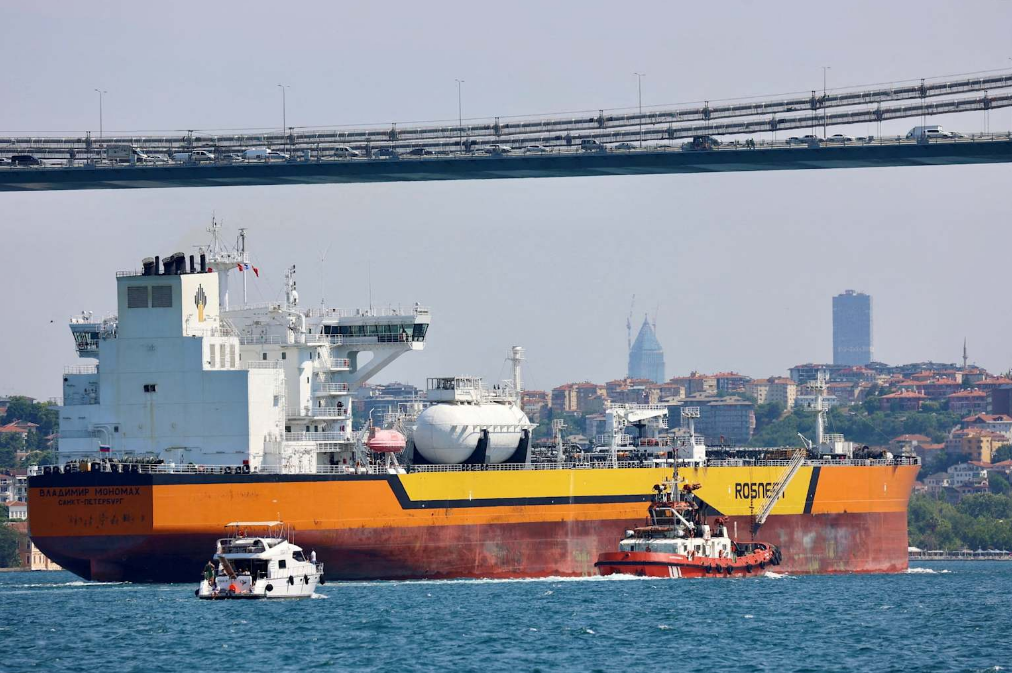
Latest Update
- Ukrainian drones successfully targeted the Slavyansk Eco oil refinery in Krasnodar Krai, causing significant damage to primary crude processing units and sparking major fires.
- New secondary sanctions have triggered a massive shift in trade as major Asian refiners move away from established Russian energy giants toward smaller, lesser-known trading entities to avoid financial penalties.
- Shipments of Russian fuel oil are increasingly being rerouted around the Cape of Good Hope, with hundreds of thousands of tonnes currently idling at sea without confirmed final destinations.
- Market analysts report that the discount for Russian Urals crude has widened significantly as the risk of engaging with sanctioned entities outweighs the benefits of cheaper energy prices.
Why are Russia fuel oil exports to Asia falling?
Russia fuel oil exports to Asia are falling mainly because sanctions have raised compliance risks for buyers and logistics providers. Many companies are unwilling to handle cargoes linked to sanctioned producers. At the same time, refinery disruptions are cutting supply at the source.
Shipments to Asia are far below last year’s volumes, according to vessel tracking data. Buyers now face the risk of secondary sanctions if they deal with Russian oil companies under restrictions. Banks, insurers, and shipping firms are also tightening rules, making trade more complex.
In addition, attacks on energy infrastructure have reduced refinery throughput. Lower processing rates mean fewer export barrels available. Together, these factors explain why Asia bound cargoes are declining despite Russia offering discounts.
Seven Top Indian CEOs to Meet Donald Trump at Davos Reception
How are sanctions changing the way Russian fuel oil is traded?
Sanctions are forcing Russian fuel oil to move through longer and less transparent trade routes. Cargoes often involve multiple intermediaries and ship to ship transfers to obscure origin.
After major Russian oil companies were added to sanctions lists, traders began restructuring deals. Simple direct sales are now rare. Instead, cargoes may change ownership several times at sea. This raises costs and delays delivery.
Some shipments are waiting at anchorages for buyers willing to accept the risk. Others are sailing without a confirmed destination. These practices increase uncertainty for Asian buyers and reduce overall trade efficiency.
Key logistical impacts of sanctions
- Longer shipping routes around Africa instead of shorter passages
- Higher freight and insurance costs
- More ship-to-ship transfers
- Delayed payments and financing challenges
Comparison of Export Volumes (January 2025 vs. January 2026)
| Metric | January 2025 | January 2026 (Est.) | Percentage Change |
|---|---|---|---|
| Total Export Volume (Tonnes) | 2.5 Million | 1.2 Million | -52% |
| Barrels Per Day (BPD) | ~510,000 | ~246,000 | -51.7% |
| Average Discount to Brent ($) | $11 – $12 | $20 – $23 | +83% (Widened) |
What role do Ukrainian drone strikes play in refinery disruptions?
Ukrainian drone strikes serve as a physical enforcement mechanism that complements economic sanctions by destroying the infrastructure necessary to process crude oil into exportable fuel products. By targeting primary processing units, Ukraine has managed to reduce Russia’s total refining throughput to levels not seen since 2010. This creates a supply vacuum that cannot be filled simply by rerouting existing pipelines.
The strike on the Slavyansk Eco refinery is a prime example of this strategy. These attacks do not just cause fires; they target the specialized metallurgy of the refinery’s core. In 2025, total crude deliveries to Russian refineries fell to 228.34 million tonnes. For the global market, this means less high-sulfur fuel oil (HSFO) is available for use as a shipping fuel or as a feedstock for more complex refineries in China and India.
This physical degradation of the Russian energy sector has long-term implications. Unlike a financial sanction, which can be lifted with a signature, a destroyed distillation tower requires specialized engineering and parts that Russia currently struggles to source. As a result, even if sanctions were eased tomorrow, the physical ability to export at 2024 levels has been compromised for the foreseeable future.
How much have exports to Asia declined?
Exports to Asia are roughly half of what they were a year ago, based on vessel tracking data.
| Metric | Earlier Period | Current Period |
|---|---|---|
| Total shipments to Asia | 2.5 million tonnes | 1.2 million tonnes |
| Average daily volume | About 500000 barrels | About 246000 barrels |
This sharp decline shows how quickly trade flows can change when sanctions and security risks escalate. Even with discounted pricing, volumes are not recovering.
How does Russia fuel oil compare with other suppliers to Asia?
Russia is facing competition and constraints at the same time; other suppliers are also struggling, tightening the overall market.
| Supplier | Current Trend | Main Issue |
|---|---|---|
| Russia | Declining exports | Sanctions and refinery disruptions |
| Venezuela | Reduced flows | Political and enforcement actions |
| Middle East | Stable to rising | Higher prices |
With fewer barrels coming from Russia and Venezuela, Asian buyers have limited alternatives. This can support prices and increase volatility.
European Bonds Gain Favor as Global Investors Flee Japan and UK Turmoil
What does this mean for Asian refiners and shipping companies?
Asian refiners and shipping firms face tighter supply and higher costs. Risk management is becoming as important as price.
High sulfur fuel oil is widely used as refinery feedstock and marine fuel. Reduced availability can force buyers to seek substitutes or pay premiums.
Shipping companies must also weigh legal exposure. Even if fuel is available, insurers and ports may refuse service. This adds complexity to fuel procurement decisions.
Why is Asia still Russia’s main destination despite the risks?
Asia remains Russia’s main destination because alternative markets are limited and some buyers are willing to manage the risk.
After losing Europe, Russia has few options. Asia offers scale and existing infrastructure. Certain hubs continue to receive Russian fuel oil after pauses.
However, volumes are smaller and more uncertain. Asia is a destination of necessity rather than choice for Russian exporters.
Will Russian fuel oil exports recover in the near term?
A near term recovery is unlikely unless sanctions ease or refinery operations stabilize.
Sanctions show no sign of being lifted soon. Monitoring and enforcement remain strong. Refinery security risks also persist.
As a result, exports are expected to remain under pressure. Any rebound would likely be gradual and fragile.
Dollar Posts Worst Week in 8 Months as Sell America Trade Gains Steam
Key Takeaways
- Russia’s fuel oil exports to Asia are sharply lower than last year
- Sanctions are the main deterrent for buyers and service providers
- Refinery disruptions are cutting supply at the source
- Asian markets face tighter high-sulfur fuel oil availability
- Trade routes are longer, costlier, and riskier
Frequently Asked Questions
Why are buyers avoiding Russian fuel oil?
Buyers fear sanctions penalties, payment issues, and insurance problems. Even discounted prices do not offset the compliance risk.
How much have shipments to Asia dropped?
Shipments are about half of last year’s levels, based on vessel tracking estimates.
Are sanctions the only reason for the decline?
No. Refinery disruptions and security incidents are also reducing export supply.
Which Asian markets are most affected?
Southeast Asia and China are most exposed due to their role as major fuel oil hubs.
Is Russian fuel oil cheaper now?
Yes, discounts exist, but many buyers still avoid the risk.
Can Asia replace Russian fuel oil easily?
Not easily. Alternative supplies are limited and often more expensive.
Will prices rise in Asia because of this?
Tighter supply can support higher prices and increase volatility.
What is ship to ship transfer?
It is the transfer of cargo between vessels at sea to obscure origin or change ownership.
Is Asia expected to remain Russia’s main buyer?
Yes, unless sanctions change, Asia will remain the primary outlet.
Conclusion
Russia fuel oil exports to Asia are under sustained pressure from sanctions and supply disruptions. Volumes are far below last year’s levels, trade routes are more complex, and buyers are increasingly cautious. For Asian markets, this means tighter availability of high-sulfur fuel oil and higher operational risks. While Asia remains Russia’s main destination by default, the relationship is weakening. Unless there is a major policy shift or a stabilization of refinery operations, Russian fuel oil exports are likely to stay constrained, reshaping energy trade dynamics across the region.