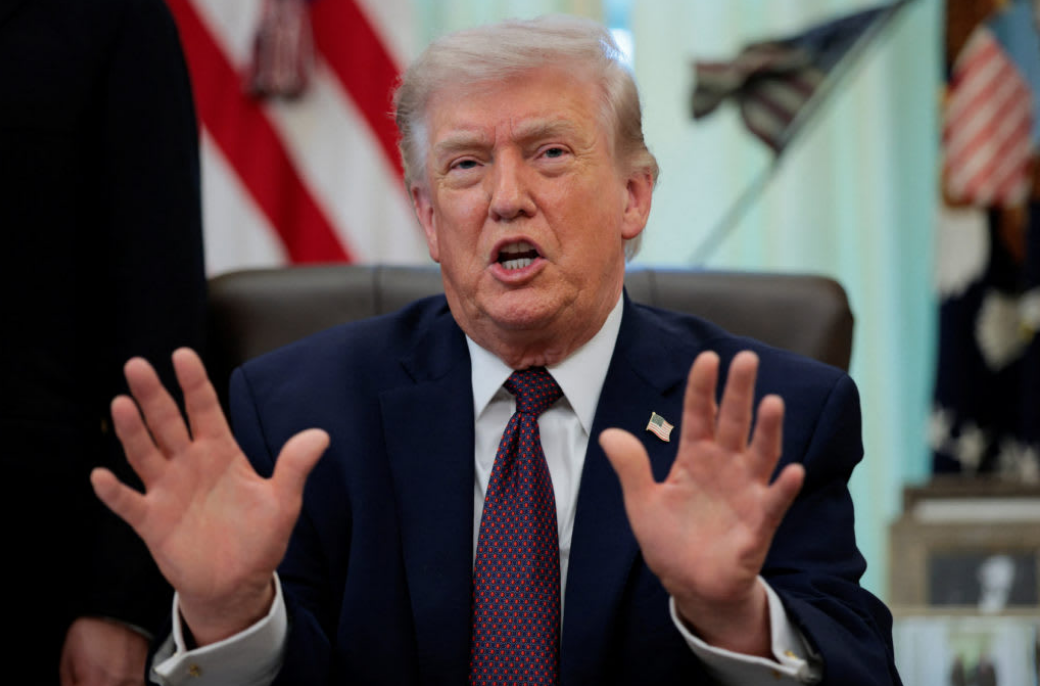
The conflict between the United States, Israel, and Iran reached a critical inflection point on Wednesday night as President Donald Trump delivered a 180° shift in rhetoric during a 19-minute national address from the White House. While asserting that the war, which began in late February 2026, is “approaching its conclusion,” the President simultaneously warned of a devastating escalation phase. This “Stone Age” threat is conditioned on the reopening of the Strait of Hormuz, a vital maritime artery that remains a central flashpoint in the rapidly evolving Middle Eastern theater.
Latest Update
- U.S. and Israeli forces have launched Operation Epic Fury, a coordinated offensive that has reportedly “absolutely destroyed” the Iranian Navy and significantly diminished Tehran’s missile capabilities.
- Following the President’s address, retaliatory strikes hit a medical research facility and a bridge near Tehran, while Iran maintained its blockade of the Strait of Hormuz despite U.S. demands.
- Humanitarian agencies report a rising toll, with an estimated 3,500 casualties and over 180,000 families displaced since the onset of hostilities in late February 2026.
- International legal bodies, including Amnesty International, have issued warnings that threats to strike civilian energy infrastructure and power plants could constitute war crimes under international law.
Is There a Ceasefire Agreement Between the U.S. and Iran?
As of early April 2026, there is no active ceasefire between the United States and Iran, despite conflicting reports originating from Washington. President Trump claimed via Truth Social that Iranian President Masoud Pezeshkian had requested a truce, but this was immediately and forcefully rejected by Tehran’s leadership.
The Diplomatic Disconnect:
- U.S. Assertion: Trump characterized the current Iranian administration as “less radicalized” and claimed a ceasefire was requested under the condition of reopening the Strait of Hormuz.
- Iran’s Refutation: Foreign Minister Abbas Araghchi and Vice President Javad Zarif dismissed the claim as “false and baseless,” labeling the U.S. narrative as a “manufactured victory” designed for American domestic consumption.
- The Deadlock: Iran maintains that the waterway will remain closed as long as strikes on its national infrastructure continue, creating a cycle of escalation rather than de-escalation.
What is the Current Status of Operation Epic Fury?
Operation Epic Fury is the codename for the combined U.S. and Israeli military campaign launched on February 28, 2026. The operation seeks to neutralize Iran’s ability to project power in the Persian Gulf and dismantle its nuclear and military infrastructure.
Military Assessments as of April 2026:
The White House contends that the conflict could conclude within two to three weeks, though military analysts remain cautious. According to reports cited by Reuters, U.S. officials believe Iran’s drone and missile production sites have been “significantly diminished.” However, ground reports from Al Jazeera indicate that strikes have recently expanded to include medical research facilities, bridges, and steel manufacturing sites near the capital.
What are the Humanitarian Impacts of the War in Iran?
The human cost of the conflict has surged since the escalation of bombing began. International monitors are tracking a massive displacement crisis and a growing death toll that has sparked global concern.
Humanitarian Data Table (April 2026):
| Metric | Estimated Figure | Source |
| Total Fatalities | 3,500+ | HRANA |
| Displaced Families | 180,000 | IOM |
| Primary Conflict Zones | Tehran, Persian Gulf Coast, Steel Hubs | Al Jazeera |
| Infrastructure Status | Power Grid & Energy Facilities Threatened | National Address |
Why is the Strait of Hormuz the Center of the Conflict?
The Strait of Hormuz is the world’s most important oil transit chokepoint. Iran’s decision to block the waterway in late February 2026 effectively paralyzed a significant portion of global energy trade, prompting the U.S.-led military response.
President Trump has made the “unconditional reopening” of the Strait a non-negotiable requirement for any cessation of hostilities. Iran, conversely, views the Strait as its primary leverage. The Foreign Ministry has stated that control over the waterway is its only defense against the “destruction” of its power grid and generating plants, which the U.S. has threatened to strike simultaneously if an agreement is not reached.
How Does the 2026 Conflict Compare to Previous U.S.-Iran Tensions?
The current conflict represents the first full-scale direct military engagement between the two nations, moving far beyond the “shadow war” of previous decades.
Conflict Comparison Table:
| Feature | 2020 Tensions | 2026 Operation Epic Fury |
| Nature of Conflict | Targeted Strikes (Soleimani) | Full-scale Naval & Aerial Campaign |
| Primary Objective | Deterrence | Destruction of Infrastructure/Regime Pressure |
| Global Trade Impact | Minimal | Blockade of Strait of Hormuz |
| U.S. Leadership | Trump (First Term) | Trump (Second Term) |
| International Law | Disputed | Warnings of War Crimes (Amnesty Int.) |
Key Takeaways: The U.S.-Iran Escalation in Short
- National Address: Trump warns of “Stone Age” bombing if no agreement is reached.
- Ceasefire Status: Denied by Iran; claims of a request are labeled “absurd theater.”
- Casualties: Over 3,500 killed; 180,000 families displaced.
- Strategic Chokepoint: Strait of Hormuz remains blocked, driving global energy anxiety.
- Military Goal: U.S./Israel aim to exit “quickly” (2-3 weeks), but strikes are intensifying.
Frequently Asked Questions (FAQ)
1. Did Iran ask for a ceasefire in April 2026?
President Trump claimed Iran asked for a ceasefire via Truth Social, but the Iranian Foreign Ministry and Vice President Javad Zarif officially called the claim “false and baseless.”
2. What is Operation Epic Fury?
It is the active military campaign led by the U.S. and Israel, launched on February 28, 2026, targeting Iranian naval, missile, and infrastructure capabilities.
3. Is the Strait of Hormuz open?
No. Iran has effectively blocked the Strait since late February, and President Trump has demanded its reopening as a condition for ending the bombing.
4. How many people have died in the 2026 Iran war?
Human Rights Activists News Agency (HRANA) estimates that roughly 3,500 people have been killed as of the first week of April 2026.
5. What infrastructure is the U.S. threatening to hit next?
President Trump warned in his national address that the U.S. would hit Iran’s energy facilities and every one of its power generating plants simultaneously if no agreement is reached.
6. Is striking power plants considered a war crime?
Amnesty International has stated that bombing civilian infrastructure, such as power grids, is prohibited under international humanitarian law and could amount to war crimes.
7. Who is the President of Iran in 2026?
Masoud Pezeshkian has held the office of the President of Iran since 2024 and is the figure Trump referred to in his ceasefire claims.
Conclusion
The national address delivered by President Trump has clarified the high stakes of the 2026 Middle East conflict. While the White House projects an image of an “approaching conclusion,” the reality on the ground in Iran suggests a deepening humanitarian crisis and a rigid military deadlock over the Strait of Hormuz. With over 180,000 families displaced and critical infrastructure in the crosshairs, the next 14 to 21 days will determine if the region moves toward a fragile truce or a catastrophic escalation that could reshape the global energy and political landscape for decades. The rejection of ceasefire talks by Tehran indicates that despite significant naval losses, the Iranian leadership is not yet ready to concede to U.S. terms.