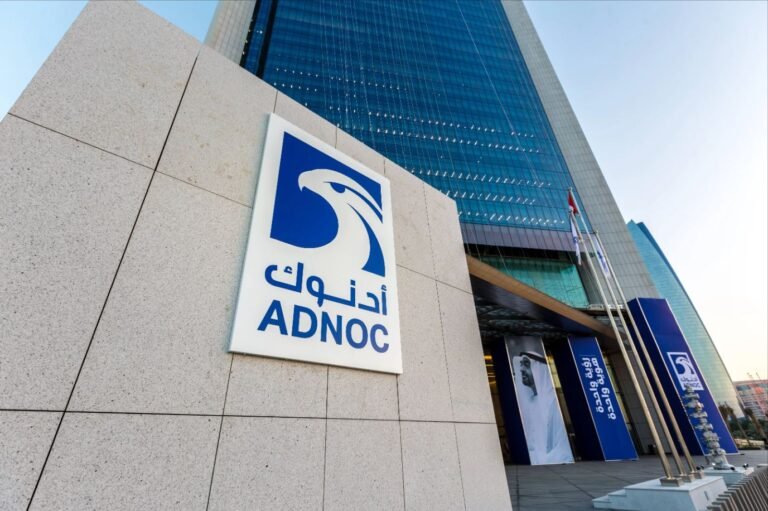
The Abu Dhabi National Oil Company (ADNOC) is currently evaluating a significant entry into Venezuela’s natural gas market through its international investment arm, XRG. This potential move aims to leverage the UAE’s capital to revitalize Venezuela’s massive but underutilized gas reserves following recent geopolitical shifts in Caracas. The initiative remains in preliminary stages and depends heavily on establishing stable legal frameworks and securing cooperation with U.S. authorities.
Latest Updates
- January 14, 2026: Reports emerge that ADNOC’s XRG unit is conducting early-stage due diligence on Venezuelan gas assets.
- January 9, 2026: U.S. President Donald Trump meets with energy executives, calling for $100 billion in private investment to rebuild Venezuelan infrastructure.
- January 3, 2026: A U.S. military operation results in the capture of Nicolás Maduro, drastically altering the political landscape for foreign investors.
- Q4 2024: ADNOC officially launched XRG with a mandate to aggressively expand the UAE’s global energy footprint.
Geopolitical and Economic Context: A New Frontier in Energy
The global energy map is shifting as Abu Dhabi seeks to transform from a regional oil power into a top-five global gas player. The interest in Venezuela comes at a historic crossroads. For decades, Venezuela’s energy sector—home to the world’s seventh-largest gas reserves—has been crippled by mismanagement, sanctions, and a lack of technical maintenance.
Following the dramatic removal of the Maduro administration in early January 2026, the “post-Maduro” era has opened a window of opportunity that was previously unthinkable. However, the “rotting infrastructure” mentioned by the White House requires more than just political stability; it requires tens of billions of dollars in immediate capital. ADNOC, through its XRG arm, possesses the liquidity that Western majors like ExxonMobil and TotalEnergies are currently hesitant to commit due to fears of historical expropriation.
Journalistic analysis suggests that ADNOC’s strategy is one of “calculated diplomacy.” By coordinating with Washington, the UAE can position itself as a stabilizing economic force in the Western Hemisphere while securing long-term assets to meet its 2050 growth targets. The Dragon gas field, located near Trinidad and Tobago, serves as the primary test case for this new era of cooperation.
Read Also: European Stocks Hit Record Highs Despite Trump’s Iran Tariff Threat
Market Dynamics and Resource Potential
Comparison of Global Gas Reserve Leaders
| Country | Gas Reserves (Trillion Cubic Meters) | Current Export Status |
| Russia | ~37.0 | High (Pipeline/LNG) |
| Iran | ~32.0 | Limited/Regional |
| Qatar | ~24.0 | Global Leader (LNG) |
| Venezuela | ~6.3 | Near Zero (Domestic Only) |
| United Arab Emirates | ~5.9 | Expanding Exporter |
XRG Investment Portfolio Growth
Current (2026)
| Year | Estimated Asset Value (USD) | Key Acquisitions/Projects |
| Late 2024 | $80 Billion | Launch of XRG Investment Arm |
| 2025 | $120 Billion | Covestro Acquisition, Rio Grande LNG Stake |
| $150+ Billion | Proposed Venezuelan Gas Entry |
Expert Analysis: Risks vs. Rewards
Market analysts note that while the resource base is undeniable, the “above-ground” risks remain substantial. Shell’s existing license to develop the Dragon field provides a blueprint for how international firms might operate under U.S. oversight. ADNOC is expected to seek a partnership model, likely joining forces with an established regional operator to mitigate operational risks.
“The UAE has the cash, and Venezuela has the molecules. The missing piece is the legal certainty that your investment won’t be seized by the next administration,” says one energy consultant familiar with the region.
Reaction from Wall Street has been cautious. While energy stocks showed slight volatility following the White House meeting, many investors are waiting for a formal “Rule of Law” framework to be established by the transitional authorities in Caracas before re-rating Venezuelan-exposed assets.
Read Also: IMF Raises US Growth Forecast to 2.4% as AI Investment Hits Record Levels
Frequently Asked Questions
Who is leading the investment for the UAE?
The investment is being evaluated by XRG, the international investment arm of the Abu Dhabi National Oil Company (ADNOC), which focuses on global gas, chemicals, and low-carbon energy.
What happened to Nicolás Maduro?
On January 3, 2026, a U.S. military operation captured the Venezuelan leader, leading to a transitional political period and a push for international reinvestment in the country.
Why is Venezuela’s gas sector currently unproductive?
Despite having the world’s 7th largest reserves, Venezuela produces only about 30 bcm per year—all used domestically—due to decaying infrastructure and years of international sanctions.
What is the “Dragon Field”?
It is a major gas field located in Venezuelan waters near Trinidad and Tobago. Shell has already received licenses to develop this field to export gas via Trinidad’s existing LNG infrastructure.
Is this investment guaranteed?
No. ADNOC has stated that interest is in the early stages and requires “clear legal and financial structures” before any capital is committed.
How does this fit into ADNOC’s 2050 goals?
ADNOC aims to be a top-five global natural gas player by 2050. Securing a foothold in Venezuela would significantly accelerate their reserve growth.
Will U.S. companies participate?
President Trump has urged U.S. firms to commit $100 billion, but major companies like ExxonMobil remain skeptical, citing the need for deeper governance reforms.
What is the role of Washington in this deal?
Any major energy deal in Venezuela currently requires close coordination with the U.S. government to ensure compliance with shifting sanctions and security protocols.
Conclusion
The potential partnership between ADNOC and the Venezuelan energy sector represents a pivotal moment in the post-Maduro landscape. If successful, the infusion of UAE capital through XRG could unlock one of the world’s largest stranded energy resources. However, the path forward is paved with significant legal hurdles and geopolitical sensitivities. Whether the UAE giant can bridge the gap between Venezuela’s vast potential and its current state of decay remains the most-watched story in the global energy market for 2026.